
Continuous Dewatering
No batch stops.
Belt and Drum Designs
Press, vacuum and drum.
Lower Energy Use
Than centrifuges.
Municipal and Industrial
Sludge and slurries.
Belt and Drum Filter Basics
How belt filter presses work, where vacuum belt filters fit, how rotary drum filters run and how the three compare.
How a Belt Filter Press Works
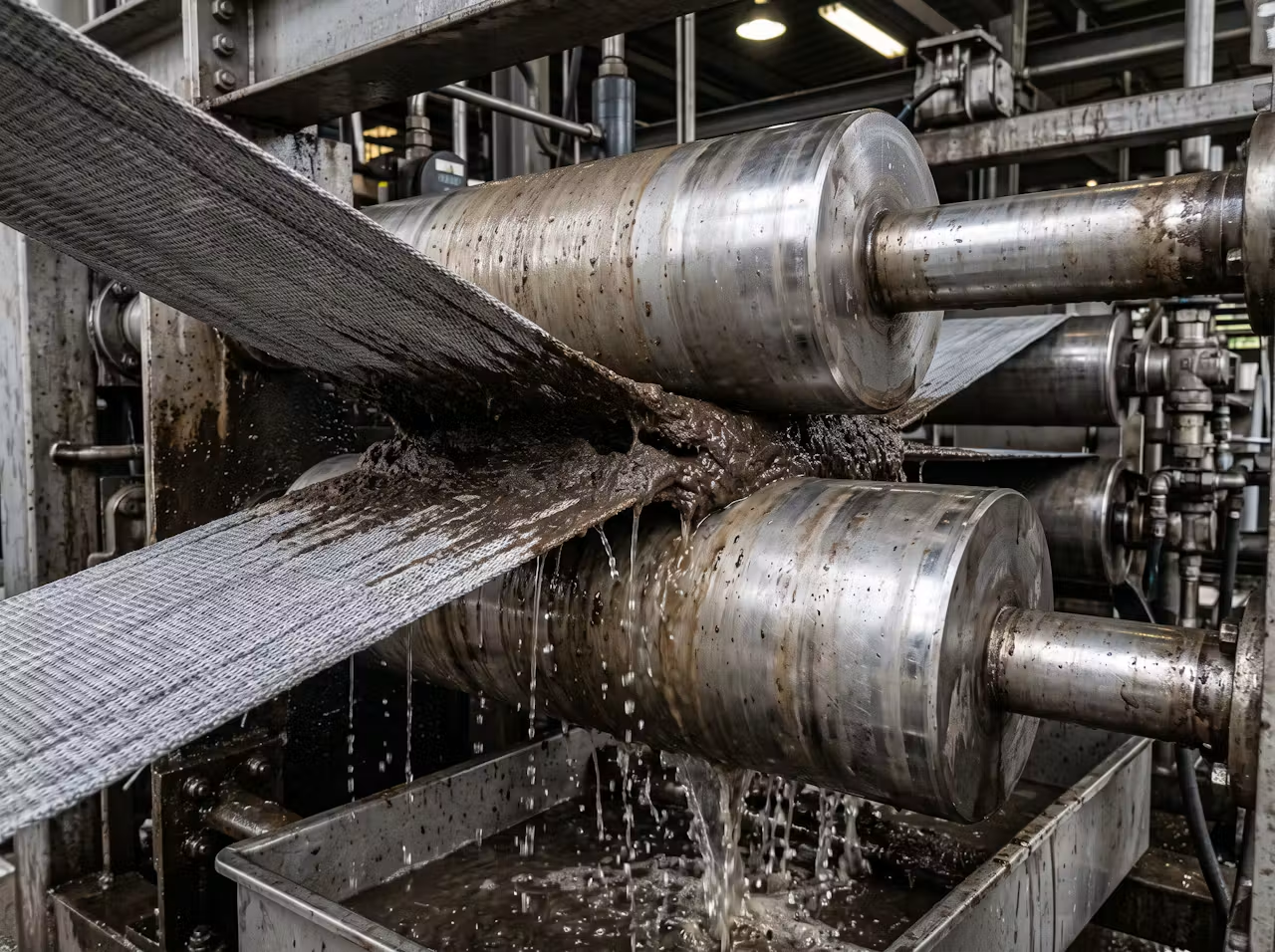
Belt filter presses use single or double moving belts to dewater sludges continuously through a combination of gravity drainage and compression. The belt filter press is a common type of dewatering equipment at municipal wastewater treatment plants, where it dewaters biosolids into a cake for storage, disposal or end use. Belt presses came into wide use in the U.S. mainly because of their ability to dewater secondary sludges, and because their energy requirements are significantly lower than centrifuges and vacuum filter dewatering equipment.
The sludge is conditioned first, usually with a polymer, so the solids form flocs that release water easily. It is then spread onto the filter belt, where free water drains off by gravity. The upper and lower belts close on the thickened sludge and carry it through a series of rollers that squeeze out more water, and the dewatered cake is scraped off the belts at the discharge.
Because the belts never stop, a belt filter press keeps dewatering as long as sludge is fed to it, and the belts are washed on the return run so the filter media stays open. Consistent feed solids and good conditioning give a drier cake and more stable operation.
Filter Belts Do the Work
The filter belt is the filter media in a belt filter press. It has to let water drain quickly in the gravity zone, hold the solids as the pressure builds, release the cake cleanly at the discharge and stand up to constant washing and tension.
Belts that are blinded with grease, oil or fines drain slowly and leave a wetter cake. Damaged seams and frayed edges cause tracking problems and solids loss, so the condition of the belt has a direct effect on cake dryness, filtrate quality and operating costs. Good operation and maintenance, including regular washing and tension checks, keeps downtime low.
Vacuum Belt Filters
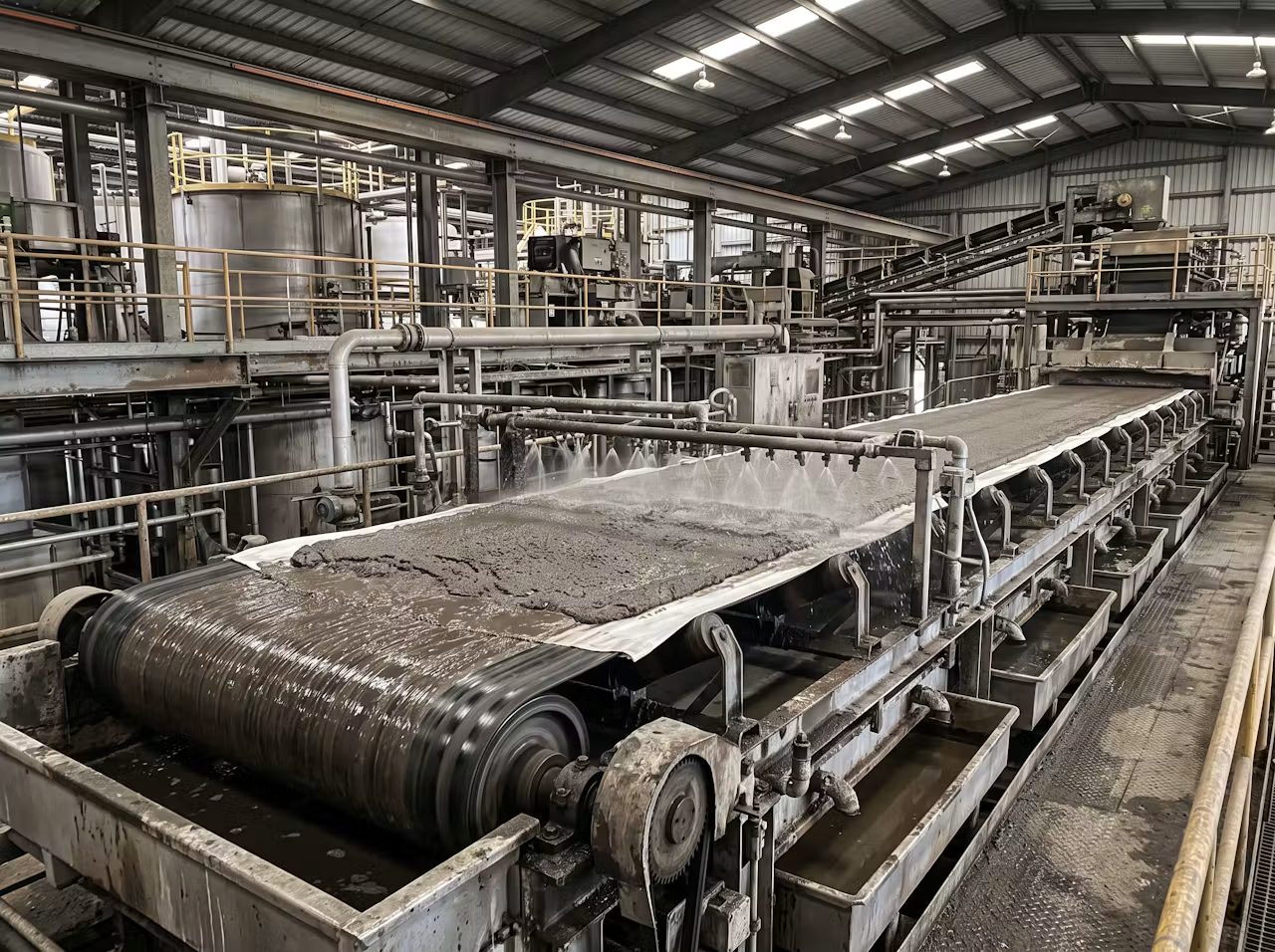
Vacuum belt filters are best suited for continuous solid/liquid separation of bulk material when additional or multiple steps are required before the final dewatering. A filter cloth rides on a moving belt over a vacuum box, and the vacuum pulls the liquid through the cloth as the slurry travels along the filter.
Because the cake moves along a flat, open belt, there is room to wash it with one or more sprays before it is dewatered and discharged. That makes vacuum belt filters a good fit for process slurries where the solids need to be recovered clean.
Rotary Vacuum Drum Filters
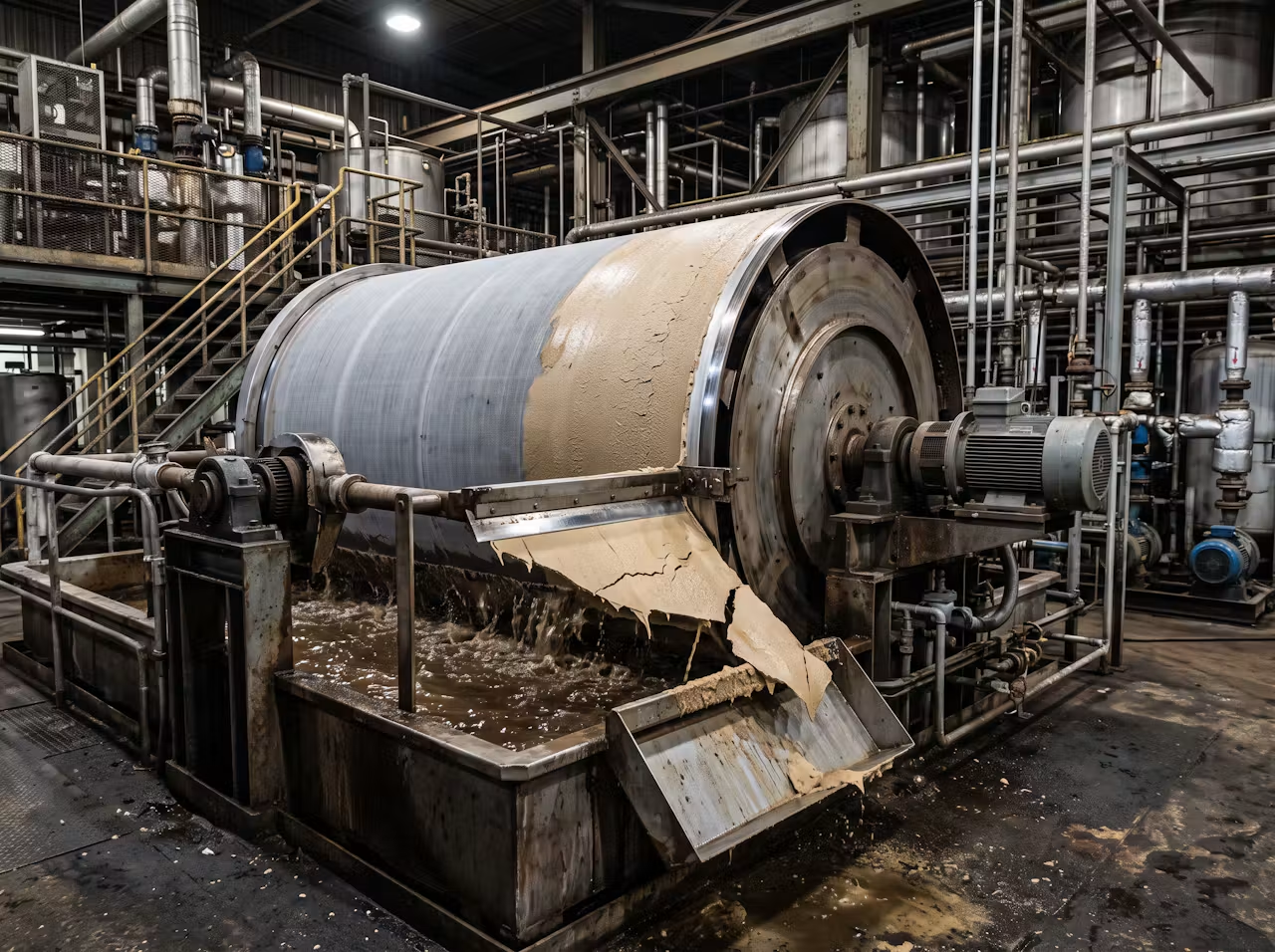
A rotary vacuum drum filter is a drum covered with filter cloth that turns while partly submerged in a slurry trough. Vacuum inside the drum pulls liquid through the cloth, and the solids build a cake on the surface. As the drum rotates out of the slurry the vacuum keeps drawing liquid out of the cake, and the cake can be washed before it is discharged.
A scraper, belt, roll or string discharge removes the cake, leaving clean cloth to re-enter the slurry on the next turn. The drum speed controls the cake thickness, so the filter can be tuned to the slurry it is running.
Belt and Drum Filters by Industry
Belt filter presses and drum filters dewater sludge and process slurries in plants of every size.
More Liquid Filtration Products
Filters that work alongside your belt and drum filtration equipment.
