Filter Press

Filter Press Filtration and Panels

A filter press separates solids from liquids under pump pressure and discharges them as a dry filter cake. Learn how filter presses work, and contact us for filter press panels and presses.

Solid/Liquid Separation

Driven by a slurry pump.

Batch Operation

Fixed volume per cycle.

Low Cake Moisture

High filtrate clarity.

Panels and Presses

Quoted to your press.

Filter Press

Filter Press Basics

How a filter press works, the main plate designs, the filtration cycle and where presses are used.

How It Works

Pressure driven separation.

Plate Types

Frame, recessed, membrane.

Filter Cycle

Fill, filter, discharge.

Panels and Presses

Quoted to your press.

How It Works

How a Filter Press Works

Filter presses were introduced at the turn of the century and have been used for many years, mainly to dewater waste sludge. A filter press is a separation process for solid/liquid separation that uses the principle of pressure drive, provided by a slurry pump.

The major components of a filter press are the skeleton and the filter pack. The skeleton holds the filter pack together while pressure is developed inside the filter chamber. As slurry is pumped in, the liquid passes through the filter media on each plate and leaves as clear filtrate, while the solids stay behind and build a filter cake.

A filter press is a fixed volume, batch operation. Each chamber can only hold a specific volume of solids, so the operation must be stopped to discharge the filter cake before the next batch can be started.

Warning Signs

Signs Your Filter Press Needs Attention

  • Filtrate comes out cloudy or carries solids

  • Cake is wet or will not release from the plates

  • Cycle times get longer than normal

  • Leaks between plates when the press is closed

  • Cracked, warped or damaged plates

Pre-filtering a process liquid? See our liquid filter bags →

Plate Types

Filter Press Plate Designs

Filter presses are built around a few common plate designs. The right one depends on the slurry, the cake you need and how much liquid has to come out of it.

Plate Design How It Works Typical Use
Plate and Frame Flat plates alternate with hollow frames that hold the cake Smaller batches and polishing
Recessed Chamber Each plate has a recessed face, so two plates form a chamber Sludge dewatering and general service
Membrane Recessed plates with a flexible membrane that squeezes the cake Drier cake and shorter cycles
Filter Pack

The Filter Pack and Filter Media

The filter pack is the working part of the press. Each plate carries filter media that lets the liquid through and holds back the solids, and the plates are clamped together so the chambers seal while the slurry pump builds pressure.

Because the cake builds on the media, the condition of the plates and media decides how clear the filtrate is and how well the cake releases at the end of each cycle. Damaged plates and worn media lead to leaks, wet cake and longer cycle times.
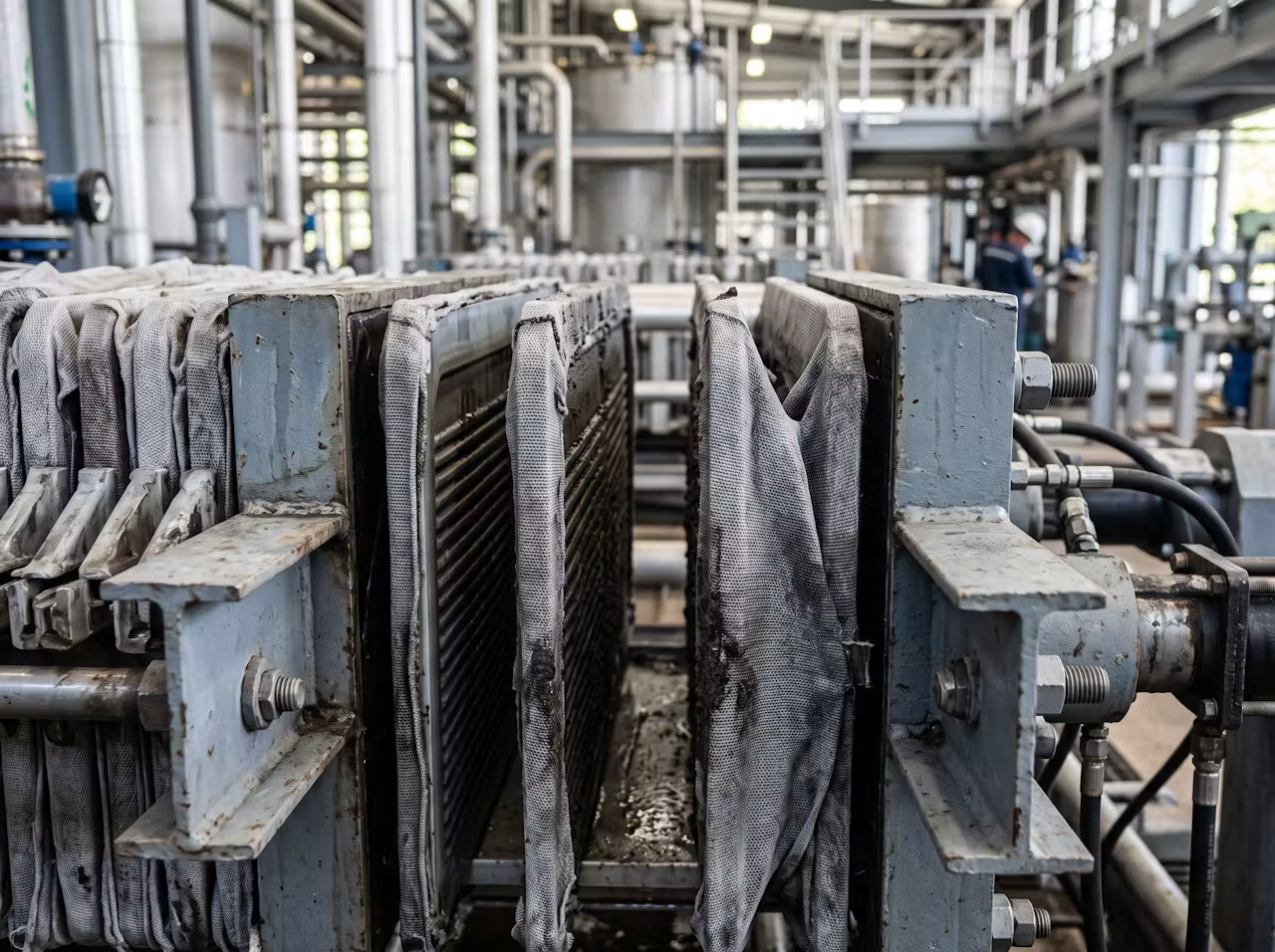
Recessed chamber filter press plates covered with grey filter cloth in a steel frame

Plates clamped in a frame

Media on every plate

Sealed chambers

Cake builds on the media

Filter Cycle

The Filter Press Cycle

Every batch follows the same cycle. Knowing where your press is in the cycle helps you spot problems early, such as a cake that will not release or filtrate that turns cloudy.

Step What Happens
1. Close The skeleton clamps the filter pack together so the chambers seal.
2. Fill A slurry pump fills the chambers between the plates.
3. Filter Liquid passes through the media as filtrate while solids build a cake.
4. Finish Flow drops as the chambers fill with cake and pressure rises.
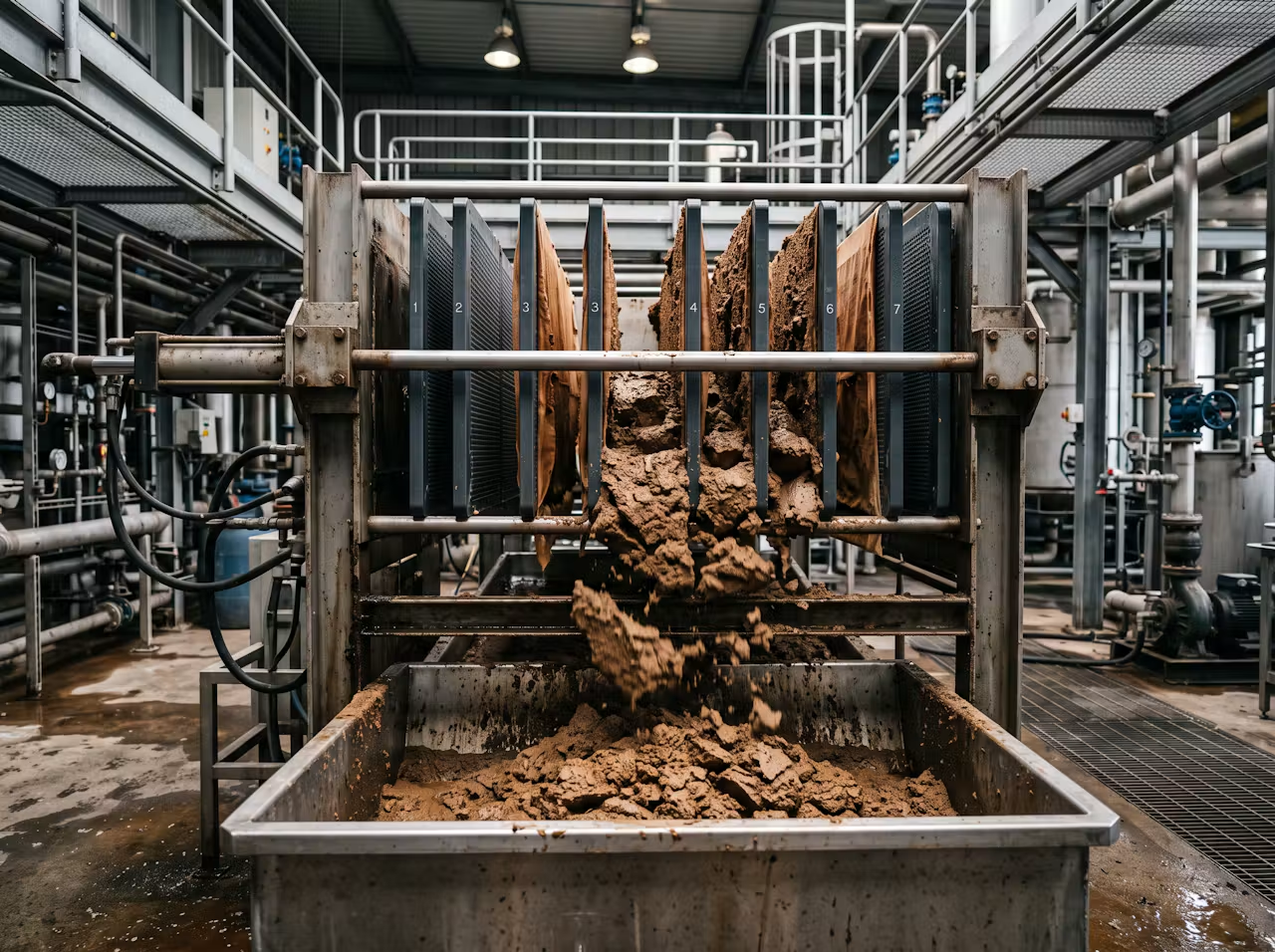
5. Discharge The press opens and the filter cake drops out before the next batch.
Filter press plates opened with dewatered sludge filter cake dropping into a hopper
Cake Discharge

Dewatering and Cake Discharge

Filter presses are designed for high flexibility, low cake moisture and high filtrate clarity. At the end of each batch the plates separate and the dewatered filter cake drops out, ready for disposal or recovery, while the clear filtrate has already left the press.

Modern presses are highly automated for minimum maintenance and maximum productivity, with automatic plate shifting and cake discharge on many systems.

Low cake moisture

High filtrate clarity

Highly automated

Batch discharge

Panels and Presses

Filter Press Panels and Presses

American Fabric Filter supplies filter press panels and filter presses. Send us the press make and model, the plate size and the slurry you are filtering, and we will quote the right replacement panels or a press for your process.

Filter presses often work alongside other liquid filters. Bag filters and filter cartridges can pre-filter or polish the liquid, and filter press panels are also used in larger botanical extraction systems.
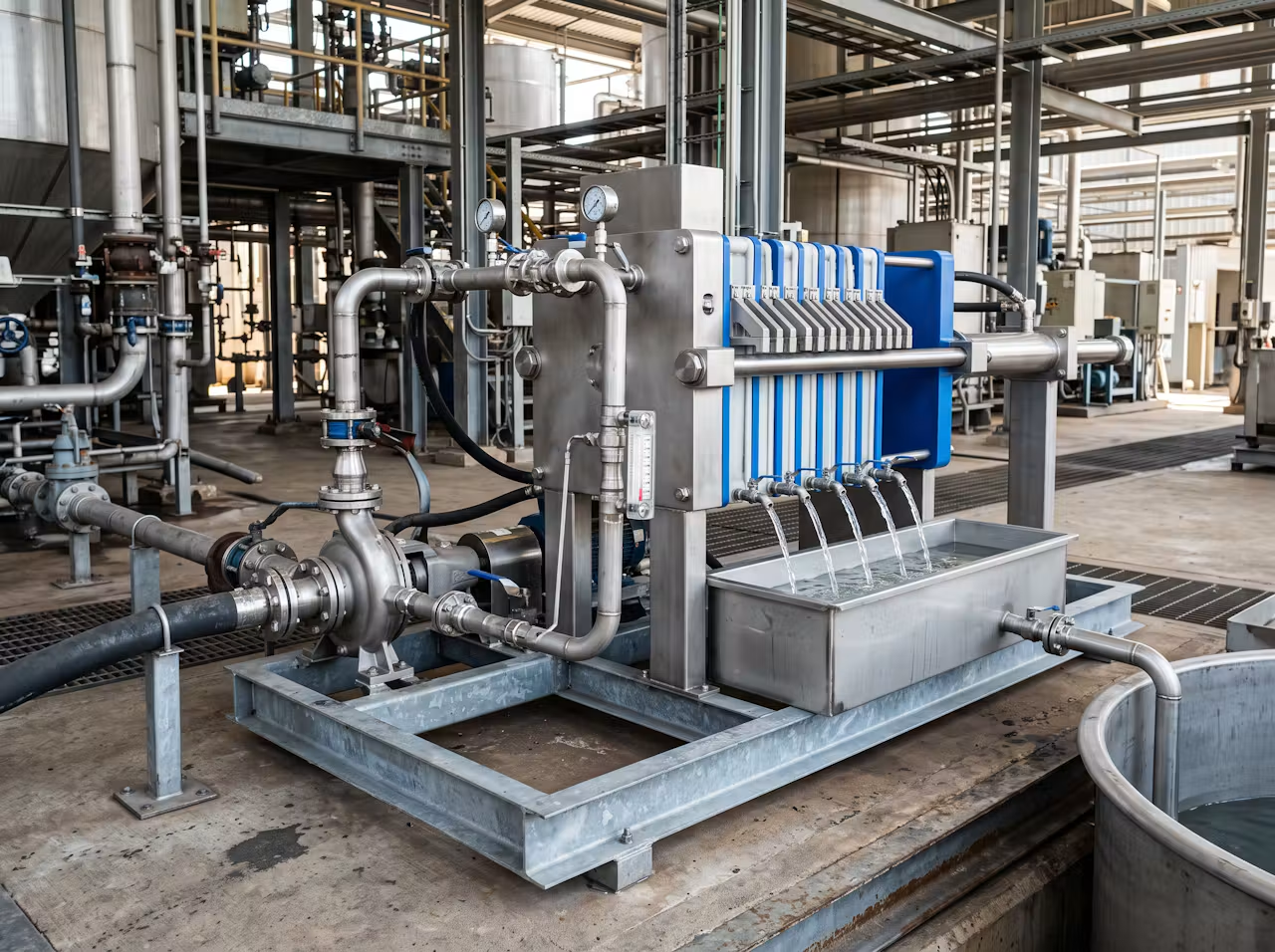
Compact plate filter press on a skid with slurry pump and clear filtrate in a chemical plant

Filter press panels

Filter presses

Quoted to your press

Bags and cartridges too

Industries

Filter Presses by Industry

Filter presses dewater sludge and separate solids from process liquids in plants of every size.

Food & Beverage

Pharmaceutical

Manufacturing

Paint & Coatings

Municipal

Wastewater Treatment

Oil Field

Metal Working

FAQs

Filter Press Questions

Send us your press make, model and plate size, and we will quote the right panels.

A filter press is a solid/liquid separation machine. A slurry pump drives the liquid through a pack of filter plates under pressure, the solids build up as a filter cake inside the chambers, and the clear filtrate drains out. It has been used for many years, mainly to dewater waste sludge.

The press closes the filter pack, and a slurry pump fills the chambers between the plates. Liquid passes through the filter media on each plate while the solids stay behind and build a cake. When the chambers are full, the press is opened and the cake is discharged before the next batch starts.

A filter press is a fixed volume, batch operation. Each chamber can only hold a specific volume of solids, so the press must be stopped to discharge the filter cake before the next batch can be started.

The two major components are the skeleton and the filter pack. The skeleton is the frame that holds the filter pack together while pressure is developed inside the filter chambers. The filter pack is the set of plates and filter media that captures the solids.

The common designs are plate and frame, recessed chamber and membrane plates. Recessed chamber plates are widely used for sludge dewatering, and membrane plates add a squeeze step to press more liquid out of the cake.

Filter presses are used to dewater wastewater sludge and to separate solids from process liquids in industries such as chemical processing, mining, food and beverage and botanical extraction.

Filter presses are designed for high flexibility, low cake moisture and high filtrate clarity. Many are highly automated for minimum maintenance and maximum productivity.

Yes. We supply filter press panels and filter presses, along with the bags, cartridges and other filters that are often used around them. Contact us with your press make, model and plate size for a quote.

Liquid Filtration

More Liquid Filtration Products

Bags, cartridges and media that work alongside your filter press.

Vessel Bags

Felt and mesh liquid filter bags.

Cartridges

Pleated, melt blown and membrane.

Filter Media

Liquid filter felts and mesh.

Housings

Bag and cartridge housings.

Need Filter Press Panels?

Send us your press make and model, plate size and slurry, and we will quote the right filter press panels.