Process Equipment

Magnetic Separators for Product Purity and Equipment Protection

Magnetic separation equipment that removes metal to protect product purity and processing equipment, reclaim metals and concentrate minerals.

Product Purity

Remove tramp metal.

Protect Equipment

Avoid costly repairs.

Reclaim Metals

Recover saleable material.

Full Line

Many separator types.

How It Works

How Magnetic Separation Works

Magnetic separators pull metal out of a moving stream of material, whether on a conveyor belt, in a chute or through a processing line. Ferrous metal is captured by magnets, and eddy current separators handle nonferrous metals.

In addition to ensuring product purity, magnetic separators prevent costly repairs and downtime by protecting processing equipment from damaging metal.

Reclaiming metals, recovering saleable materials and concentrating minerals are other important uses.

Warning Signs

Signs You Need Magnetic Separation

  • Metal found in finished product

  • Damage to mills, grinders or crushers

  • Downtime from tramp metal jams

  • Saleable metal lost in waste

  • Customer complaints about contamination

Screening product too? See sifters →

Separator Types

Overhead, Drum, Pulley and Processing Magnets

The right separator depends on where metal enters your process and how the material moves.

Overhead magnets hang above conveyors. Drum separators and magnetic head pulleys work in the material flow. Processing magnets sit in chutes and lines. Magnetic sweeps clean floors and yards.

Tell us your material, flow and where metal is getting in, and we will help select the right separator.
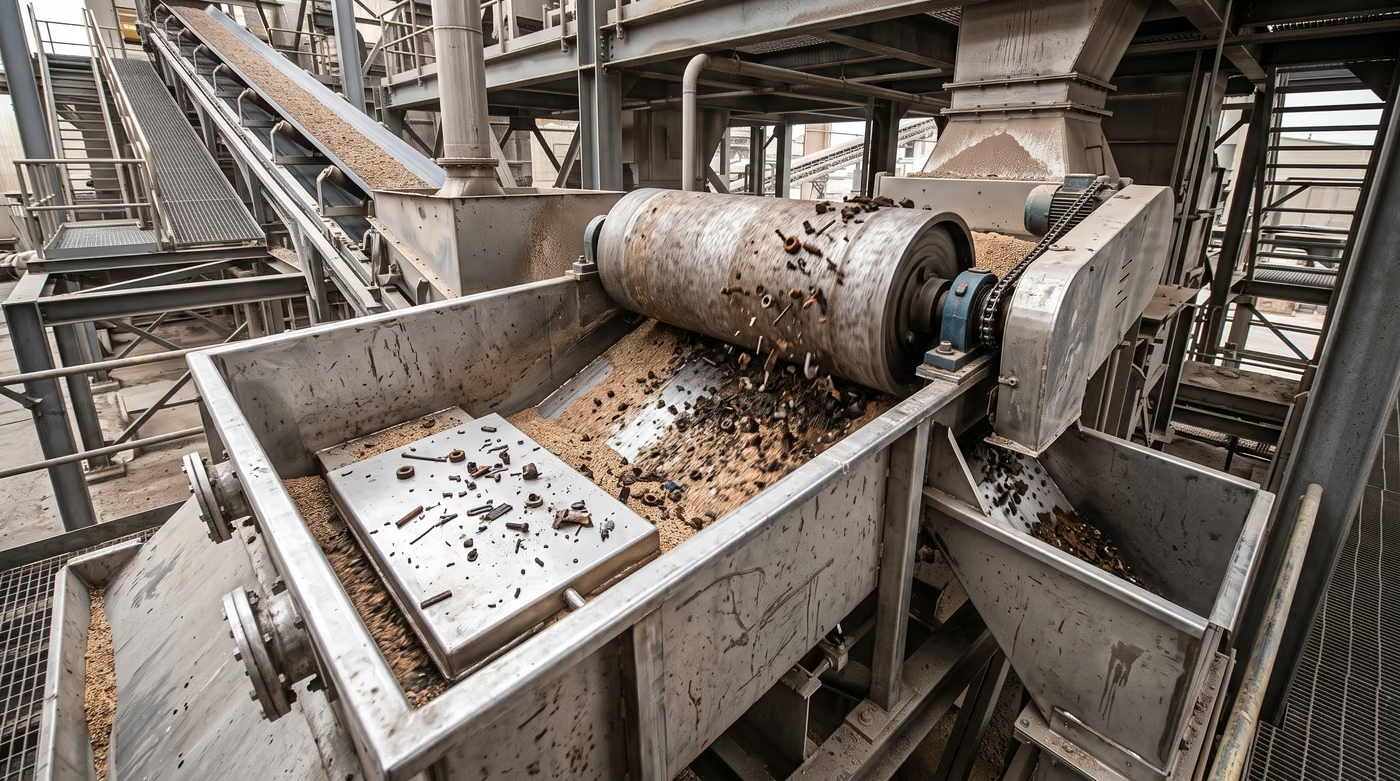
Magnetic drum separator and plate magnet in a stainless chute catching tramp iron

Ferrous metals

Nonferrous metals

Conveyor magnets

In-line magnets

Separator Types

Magnetic Separation Equipment

A full line of magnet products used in numerous industries.

Equipment Typical Use
Overhead Electromagnet Removes tramp metal from material on conveyors
Overhead Permanent Magnet Removes tramp metal over conveyors without power to the magnet
Eddy Current Separator Separates nonferrous metals
Drum Separator Separates ferrous metal from material flow
Magnetic Head Pulley Separates ferrous metal at the end of a conveyor
Magnetic Sweep Picks up loose metal from floors and yards
Processing Magnet Captures metal in chutes and processing lines
Get a Quote

What to Send for a Magnet Quote

Send us these details and we will help select the right separator.

Detail What We Need
Material What you are processing
Contaminant Ferrous, nonferrous or both, and typical size
Location Conveyor, chute, line or floor
Flow Belt width, speed or throughput
Goal Product purity, equipment protection or recovery
Industries

Magnetic Separation by Industry

Magnetic separators for processing, recycling and minerals.

Food Processing

Milling

Manufacturing

Metal Working

Asphalt

Wastewater Treatment

Pharmaceutical

Woodworking

FAQs

Magnetic Separator Questions

Send us your material and where metal gets in, and we will help select a separator.

Magnetic separators remove ferrous and nonferrous metals from material, ensuring product purity and protecting processing equipment from damaging metal.

By capturing metal before it reaches processing equipment, magnetic separators prevent costly repairs and downtime.

Yes. Reclaiming metals, recovering saleable materials and concentrating minerals are other important uses for magnetic separators.

Common types include overhead electromagnets, overhead permanent magnets, eddy current separators, drum separators, magnetic head pulleys, magnetic sweeps and processing magnets.

Process Equipment

More Process Equipment

Equipment that moves, screens, weighs and protects your product.

Sifters

Gyratory, reclaim and vibratory.

Scales

Industrial floor and bench scales.

Vacuum Conveying

Enclosed pneumatic conveying.

Dust Explosion Prevention

Spark detection systems.

Need Magnetic Separation?

Send us your material, flow and where metal gets in, and we will help select the right separator.