Reverse Osmosis

Reverse Osmosis Filters and RO Membrane Elements

Toray brackish water reverse osmosis elements, 8 inch by 40 inch, for industrial and commercial RO systems. Low energy, high rejection membranes for process water, boiler feed and water treatment.

8″ x 40″ Elements

Fits standard 8 inch vessels.

Polyamide TFC

Thin film composite membrane.

99.8% Salt Rejection

TM720D-400 rated value.

Brackish Water

Well, surface and tap water.

RO Filters

Find the Right Reverse Osmosis Filter

Replacement RO membrane elements, specifications and pretreatment for industrial reverse osmosis systems.

How RO Works

Membrane, permeate and concentrate.

Element Specs

Compare models and limits.

Pretreatment

Protect the membrane.

Shop Online

Order RO elements.

How It Works

How a Reverse Osmosis Filter Works

Osmosis moves water from a dilute solution toward a concentrated one. Reverse osmosis applies pressure to the feed water to push it the other way: water molecules pass through a semipermeable membrane while dissolved salts and other contaminants are held back. This water purification process removes nearly every dissolved contaminant. The purified water, called permeate, collects in the center tube, and the rejected salts leave the system in a concentrate stream.

Industrial reverse osmosis systems use spiral wound membrane elements. Flat sheets of polyamide thin film composite membrane are wrapped around a permeate tube with feed spacer mesh between the layers, then loaded end to end into pressure vessels. The feed water flows along the element, and each stage of vessels increases recovery.

Every reverse osmosis system depends on its water supply. Membrane performance changes with water quality, water pressure, temperature and pretreatment. A reverse osmosis water filtration system that is fed clean, dechlorinated water and cleaned on schedule holds its flow rate and salt rejection far longer, which extends filter life.

Warning Signs

Signs Your RO Membranes Need Cleaning or Replacement

  • Normalized permeate flow drops 10 to 15 percent

  • Salt passage or permeate conductivity rises

  • Pressure drop climbs across the vessels

  • Cleanings are needed more and more often

  • Cleaning no longer restores performance

Protect new elements with the right pre-filter cartridges →

Specifications

RO Membrane Element Specifications

Our reverse osmosis elements are 8 inch by 40 inch spiral wound elements for brackish water. TM720D-400 performance is rated with 2,000 mg/L NaCl feed water at 225 psi, 77°F, 15 percent recovery and pH 7. Permeate flow is rated in gallons of water per day (gpd). Actual water flow and rejection depend on your water source and system design.

Specification TM720D-400 TM720D-370 RE8040-BE34
Type Brackish water RO element Brackish water RO element Brackish water RO element
Size 8″ x 40″ 8″ x 40″ 8″ x 40″
Active Area 400 ft² (37 m²) Contact for specs Contact for specs
Permeate Flow 11,000 gpd (41.6 m³/d) Contact for specs Contact for specs
Salt Rejection 99.8% (99.65% minimum) Contact for specs Contact for specs
Feed Spacer 34 mil Contact for specs Contact for specs
Membrane Polyamide thin film composite Polyamide thin film composite Polyamide thin film composite
Operating Limits

Typical Operating Limits

These limits are listed on the Toray TM700D series data sheet for 8 inch brackish water elements. Always follow the data sheet for the exact element installed in your system.

Operating Limit Value
Maximum Operating Pressure 600 psi (4.1 MPa)
Maximum Feed Water Temperature 113°F (45°C)
pH, Continuous Operation 2 to 11
pH, Chemical Cleaning 1 to 13
Maximum Feed SDI 5
Free Chlorine Less than 0.1 ppm
Maximum Pressure Drop 15 psi per element, 50 psi per vessel
Toray Elements

Low Energy Brackish Water RO Elements

AFF offers Toray durable, low energy brackish water reverse osmosis (BWRO) elements and low fouling membrane elements. These elements are built for strong salt and silica rejection at lower operating pressure, which means high quality filtered water with less energy spent on the high pressure pump.

Each element is a spiral wound polyamide thin film composite membrane, 8 inches in diameter and 40 inches long, built to fit standard 8 inch pressure vessels in industrial and commercial RO systems. A wide pH tolerance allows effective membrane cleaning.
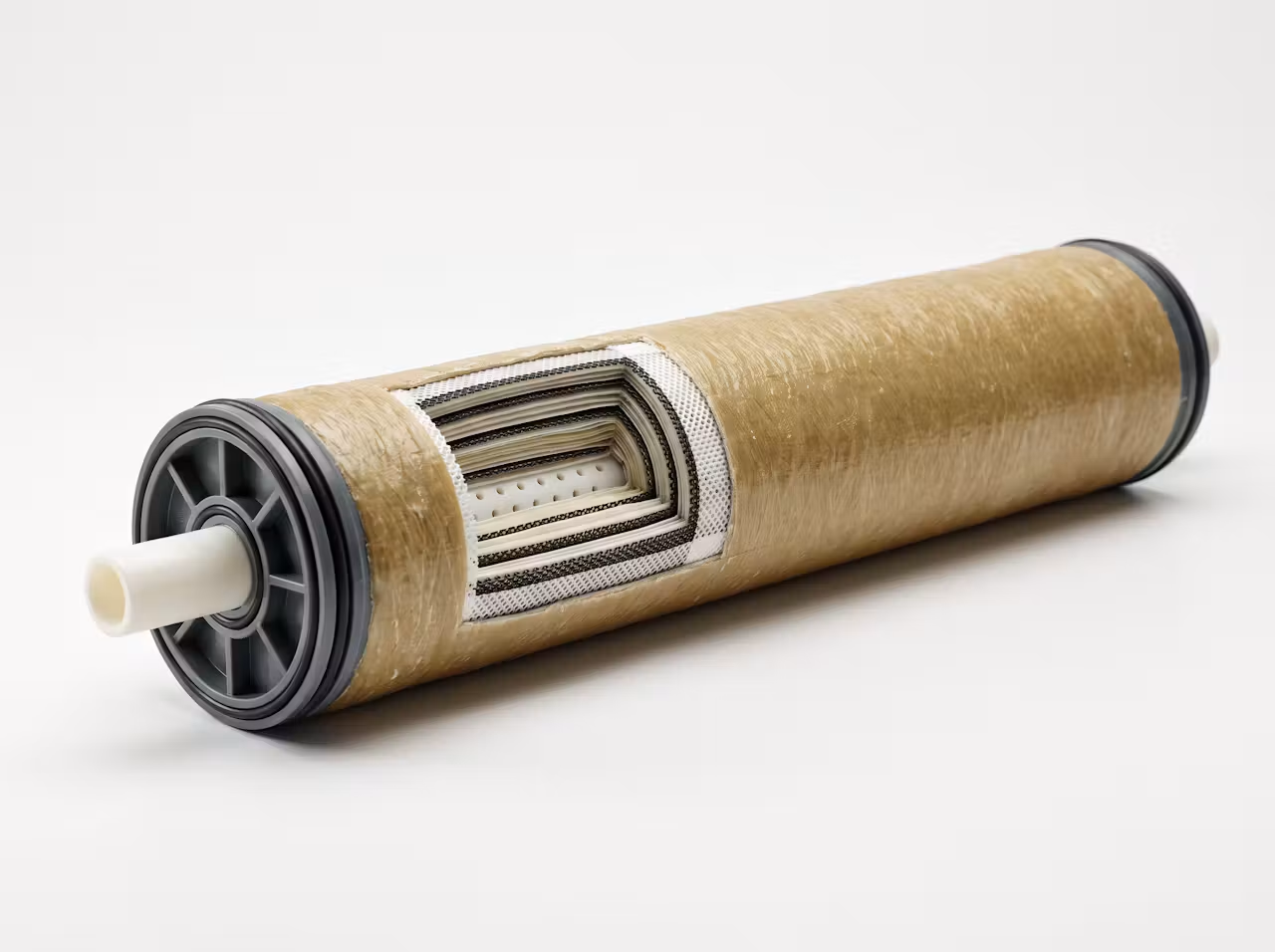
Spiral wound 8 inch reverse osmosis membrane element with cutaway of membrane layers

8″ x 40″ size

Salt and silica rejection

Lower energy use

Wide cleaning pH range

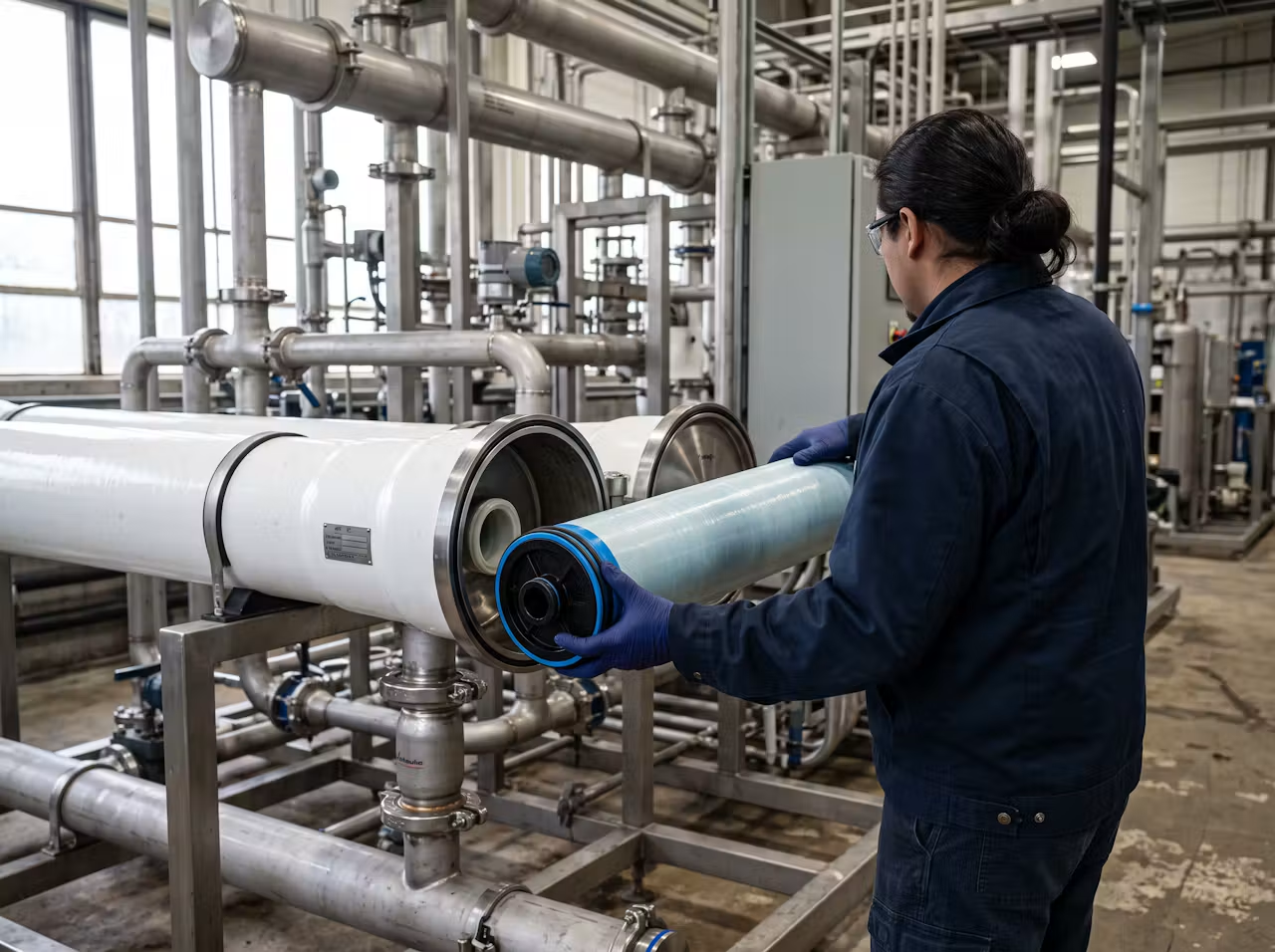
Technician loading a reverse osmosis membrane element into a fiberglass pressure vessel
Installation

Bi-Directional Brine Seals and Easy Loading

Toray membrane elements can be equipped with bi-directional brine seals. The seal works in either direction, so elements load and unload from either end of the pressure vessel and can be cleaned in both directions.

When you replace RO membranes, replace the whole vessel at once when you can, inspect the interconnectors and O-rings, and flush new elements to drain before sending permeate to service. Store spare elements in a cool, dry place out of direct sunlight.

Loads from either end

Cleans in both directions

Standard 8″ vessels

Replacement elements

Pretreatment

Pretreatment That Protects RO Membranes

Most RO membrane problems start upstream. Suspended solids foul the feed spacer, chlorine attacks the polyamide membrane, and hardness forms scale as the water is concentrated. Good pretreatment keeps the feed SDI at 5 or less and free chlorine below 0.1 ppm.

A typical pretreatment filter system uses filter bags or sediment cartridge filters to remove particles, carbon filters or chemical dechlorination to remove chlorine, and an antiscalant or water softener for hard water. AFF supplies the filter housings, bags and cartridges for the pre-filter stage.
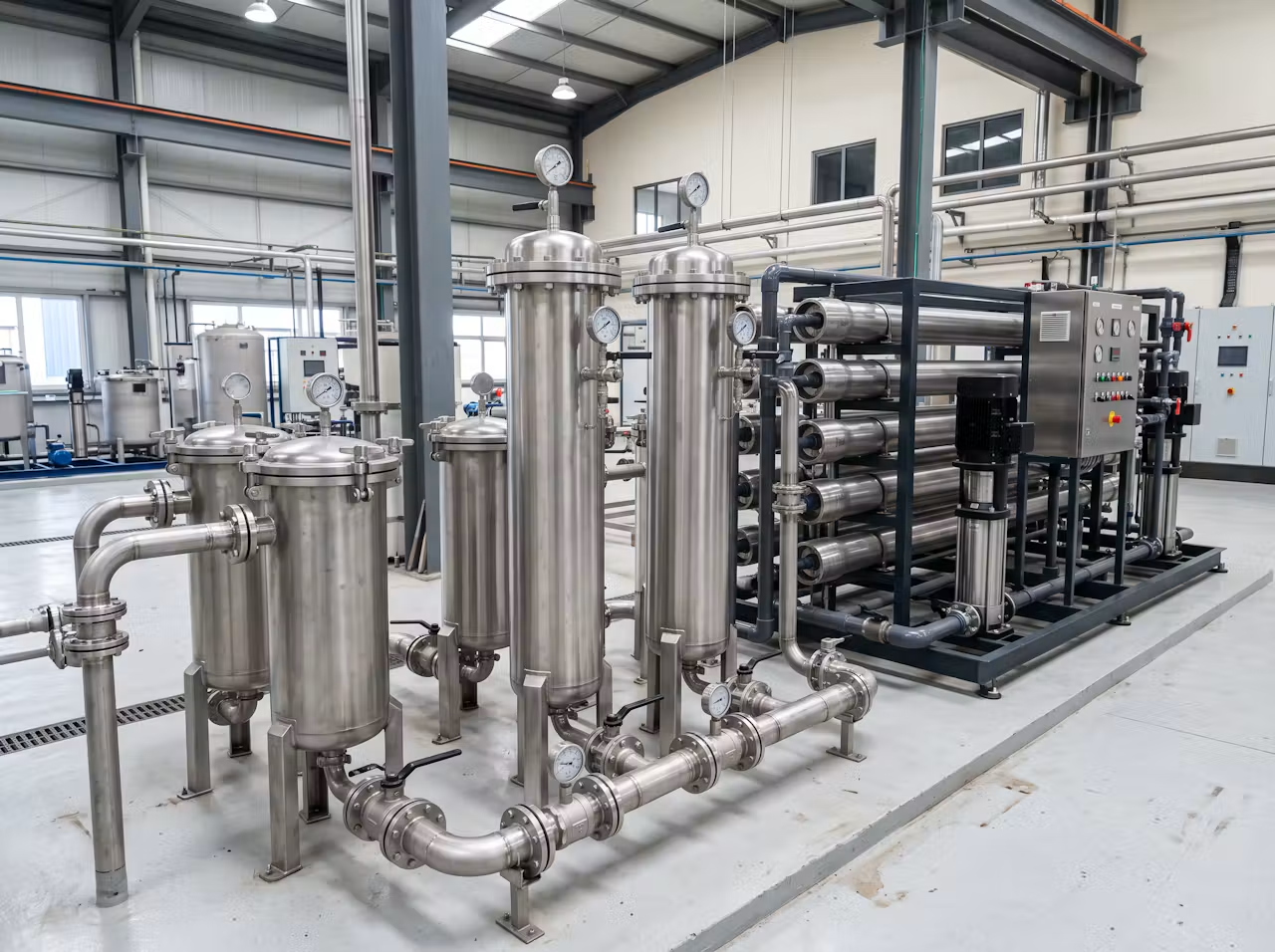
Industrial cartridge filter housings and bag filter vessels used as reverse osmosis pretreatment

Sediment pre-filters

Dechlorination

Scale control

Feed SDI 5 or less

Compare

Where the RO Filter Fits in Water Treatment

Reverse osmosis is the main purification stage in a multi-stage water filtration system, whether the feed is well water, surface water or tap water. The stages before it protect the membrane and set its service life.

Filtration Stage What It Removes Role in an RO System
Bag Filters Sediment and suspended solids First stage pre-filter for high flow
Cartridge Filters Fine particles and sediment Final pre-filter that protects the membrane
Carbon Filters Chlorine, odor and organics Dechlorination ahead of the membrane
Water Softener or Antiscalant Hardness that forms scale Scale control for higher recovery
Reverse Osmosis Dissolved salts, silica and most contaminants Main purification stage
Industries

Reverse Osmosis Filtration by Industry

Reverse osmosis systems supply process water, boiler feed water, rinse water and purified water for industrial and commercial facilities.

Pharmaceutical

Food & Beverage

Manufacturing

Municipal

Wastewater Treatment

Oil Field

Power & Cogeneration

Chemical & Automotive

Maintenance

RO Membrane Care and Replacement

A steady operating log is the best tool for protecting your RO filters. Track feed pressure, permeate flow, permeate conductivity, pressure drop and temperature each day, and normalize the readings so changes in water temperature do not hide fouling or scaling.

Run at the design recovery to keep water waste down without scaling the last elements. Clean early, before fouling hardens on the membrane. Use cleaning chemicals within the pH 1 to 13 range and the temperature limits on the element data sheet, and flush the system after every cleaning.

Replacement Checklist

  • Test your water and review the feed water analysis

  • Confirm element size and model number

  • Replace or clean pre-filter cartridges first

  • Inspect brine seals, O-rings and interconnectors

  • Flush new elements to drain before service

  • Record new baseline flow, pressure and conductivity

FAQs

Reverse Osmosis Filter Questions

Send us your element model number or feed water analysis and we will match the right RO membrane.

A reverse osmosis filter is a water filter that uses a semipermeable membrane to remove dissolved salts and other contaminants from water. Pressure pushes the feed water across the membrane, water molecules pass through as clean permeate, and the rejected salts leave in a concentrate stream. In industrial RO systems the filter is a spiral wound membrane element installed in a pressure vessel.

They are the same part. In commercial and industrial reverse osmosis systems the replaceable reverse osmosis filter is called a membrane element. Our elements are 8 inch diameter by 40 inch long brackish water elements that fit standard 8 inch pressure vessels.

Reverse osmosis removes most dissolved salts, along with silica, hardness and many other dissolved contaminants, plus particles that reach the membrane. The TM720D-400 element is rated at 99.8 percent salt rejection under its standard test conditions. Actual water quality depends on your feed water, pretreatment and system design.

RO membranes need clean, dechlorinated feed water. Most systems use sediment cartridges or bag filters to remove particles, carbon or chemical dechlorination to remove chlorine, and an antiscalant or water softener when hardness is high. Feed water should have a silt density index (SDI) of 5 or less.

Yes. Polyamide thin film composite membranes are damaged by oxidizers. Free chlorine in the feed water should stay below 0.1 ppm, so chlorinated tap water or municipal water must be dechlorinated before it reaches the reverse osmosis filter.

With good pretreatment and regular cleaning, industrial RO elements often run for several years. Replace an element when cleaning no longer restores permeate flow, salt rejection or pressure drop, or when the element is physically damaged.

A common guideline is to clean when normalized permeate flow drops about 10 to 15 percent, salt passage rises noticeably, or the pressure drop across the vessel climbs 10 to 15 percent above startup values. Clean within the pH 1 to 13 range listed for the element.

No. Our reverse osmosis elements are 8 inch by 40 inch industrial and commercial elements for brackish water RO systems. Under-sink and countertop drinking water systems use much smaller membranes, a storage water tank and a dedicated faucet, and a whole house water filtration system is sized differently again.

Yes. Send us the make, model number and size of the element in your system, or your feed water analysis and flow rate, and we will help you find the right replacement filter for your reverse osmosis system.

Shop Online

Shop Reverse Osmosis Filters

Order replacement 8 inch RO membrane elements online, or contact us for quantity pricing.

Available Elements

  • TM720D-400 brackish water RO element

  • TM720D-370 brackish water RO element

  • RE8040-BE34 brackish water RO element

Choose the model that matches your existing elements. Not sure which one you have? Call 1-877-742-3653 or 813-991-9400 with the model number printed on the element label.

Liquid Filtration

Bags, cartridges and housings.

Cartridges

Pre-filter cartridges for RO.

Liquid Filters

Shop liquid filter products.

Contact Us

Get help sizing an element.

Need Replacement RO Membranes?

Send us your element model number, system size or feed water analysis, and we will quote the right reverse osmosis filter.