Filter Media

Dust Collector Filter Media and Filter Fabrics

Needle felts, woven filter fabrics, coated materials and screening media for industrial dust collection, air filtration, connectors and custom products, with air permeability, fiber and burn test charts.

Dozens of Fabrics

Stocked and special order filter media.

Heat & Chemical Options

Media for high temperature and harsh dust.

Treated Finishes

Shed sticky dust, bleed static, resist burning.

Built Into Your Filters

Cut and sewn into custom filter products.

Media Types

Filter Media Types We Work With

Our technical sales staff chooses from dozens of filter fabrics when designing your filters, connectors and custom products. Selecting the right media for your industrial environment improves dust filtration and the life of the filter. Start with the media type, then use the charts below to compare.

Needle Felts

Polyester, polypropylene and Tetratex felts.

Woven Fabrics

Sateen, canton flannel, Dacron and duck.

Specialty & Coated

Nomex, rubber and vinyl coated, screening.

Reference Charts

Air permeability, fiber and burn test charts.

How to Choose

How to Choose the Right Filter Media

Dust collector filter media does the real work in any dust collection system. The fabric captures dust particles and particulate matter on its surface, builds a dust cake that raises filtration efficiency, and then has to release that cake every time the cleaning system pulses or shakes. The right media balances airflow, pressure drop, dust release, temperature limits and chemical resistance, and that balance sets filter life, dust holding capacity and overall collector performance.

Start with your operating temperature and the chemistry of the air stream, then look at the dust itself: fine, sticky, combustible or moist dust and highly abrasive dust each point to a different fiber, weight and finish. Finally, match the air permeability and dust load to your industrial dust collector and its air-to-cloth ratio. Our air-to-cloth calculator helps you size it, and our guide to fabric filter media for industrial dust collection goes deeper.

Warning Signs

Signs You Need a Different Media

  • High differential pressure that filter cleaning will not bring down

  • Dust bleeding through or visible stack emissions

  • Filter bags blinding with fine, sticky or damp dust

  • Brittle, shrunken or discolored bags from heat or chemicals

  • Holes and wear from abrasive dust

Not sure what is wrong? Read our fabric filter troubleshooting guide →

Download the Filter Media Reference Sheet

All three charts on this page in one printable PDF: air permeability for every fabric we stock, the fiber reference chart and the fabric burn test.

Air Permeability

Filter Media Air Permeability Chart

Typical air permeability ranges, in CFM, for the needle felts, woven filter fabrics and coated materials we use. Lower CFM means a tighter fabric capturing fine particles for higher filter efficiency; higher CFM passes more air at a lower pressure drop. “Call” means data is available on request, and 0 marks a coated or rubber fabric that does not pass air.

Needle Felt Media Min CFM Max CFM
9 oz. Plain PE Felt 45 65
9 oz. Singed PE Felt 45 65
10 oz. Glazed PE Felt 40 55
10 oz. Glazed 2 Sides PE Felt 40 55
10 oz. Shaker Felt 40 55
10 oz. Singed 2 Sides PE Felt 40 55
12 oz. Glazed PE Felt 35 45
12 oz. Plain PE Felt 35 45
12 oz. Singed PE Felt 35 45
16 oz. Glazed PE Felt 18 35
16 oz. Glazed 2 Sides PE Felt 18 35
16 oz. Plain PE Felt 18 35
16 oz. Singed PE Felt 18 35
16 oz. Singed 2 Sides PE Felt 18 35
22 oz. Plain PE Felt 10 15
12 oz. Tetratex Felt Call Call
16 oz. Tetratex Felt 12 18
12 oz. Singed Polypropylene Felt 30 40
16 oz. Glazed Polypropylene Felt 18 30
16 oz. Plain Polypropylene Felt 18 30
Woven Filter Fabrics Min CFM Max CFM
8 oz. Cotton Sateen 20 25
Polyester Sateen 20 25
868B Dacron 30 35
FV3677 Dacron 20 25
8 oz. Canton Flannel 40 45
10 oz. Canton Flannel 20 30
12 oz. Canton Flannel 35 40
14 oz. Canton Flannel 30 35
90126 Polyester 20 40
322 Polyester 70 90
1212 Willstretch 70 70
Muslin Call Call
Victor Nylon 4 4
Nylon Satin 20 25
#10 Nylon Duck 5 5
Nylon Cordura 3 3
Polyester Duck Call Call
#8 Cotton Duck 0 3
Specialty and Coated Fabrics Min CFM Max CFM
Nomex 8 11
Hypalon (NCN) 0 0
RCN 0 0
CL Black Rubber 0 0
CL White Rubber 0 0
Needle Felts

Needle Felt Filter Fabrics

Needle felt is the most common filtration media for pulse-jet baghouses and heavy-duty dust collector bags. We stock polyester (PE) felts from 9 oz. to 22 oz. and polypropylene felts in 12 and 16 oz., in plain, singed and glazed finishes on one or both sides, plus shaker felt and Tetratex membrane felt for fine particulate. The right weight and finish extends service life.

Heavier felts are denser with lower air permeability, so they are better at capturing fine dust; singed and glazed surfaces help the collected dust release so you can clean the filters with less compressed air. Felts are sewn into our replacement filter bags and baghouse replacement filters.
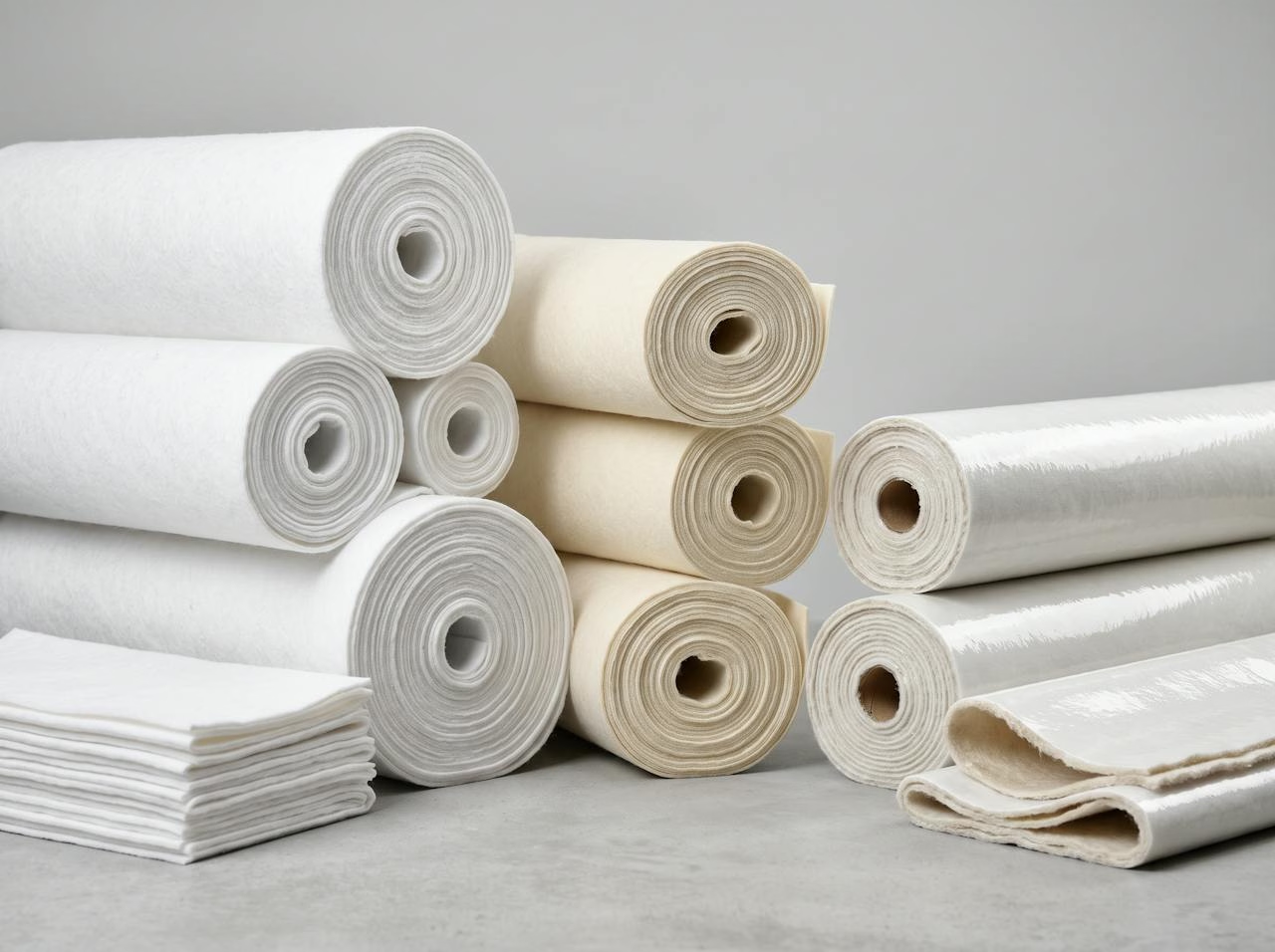
Rolls of polyester, polypropylene and glazed needle felt filter media

9 oz. to 22 oz. weights

Plain, singed or glazed

Polyester and polypropylene

Tetratex membrane felt

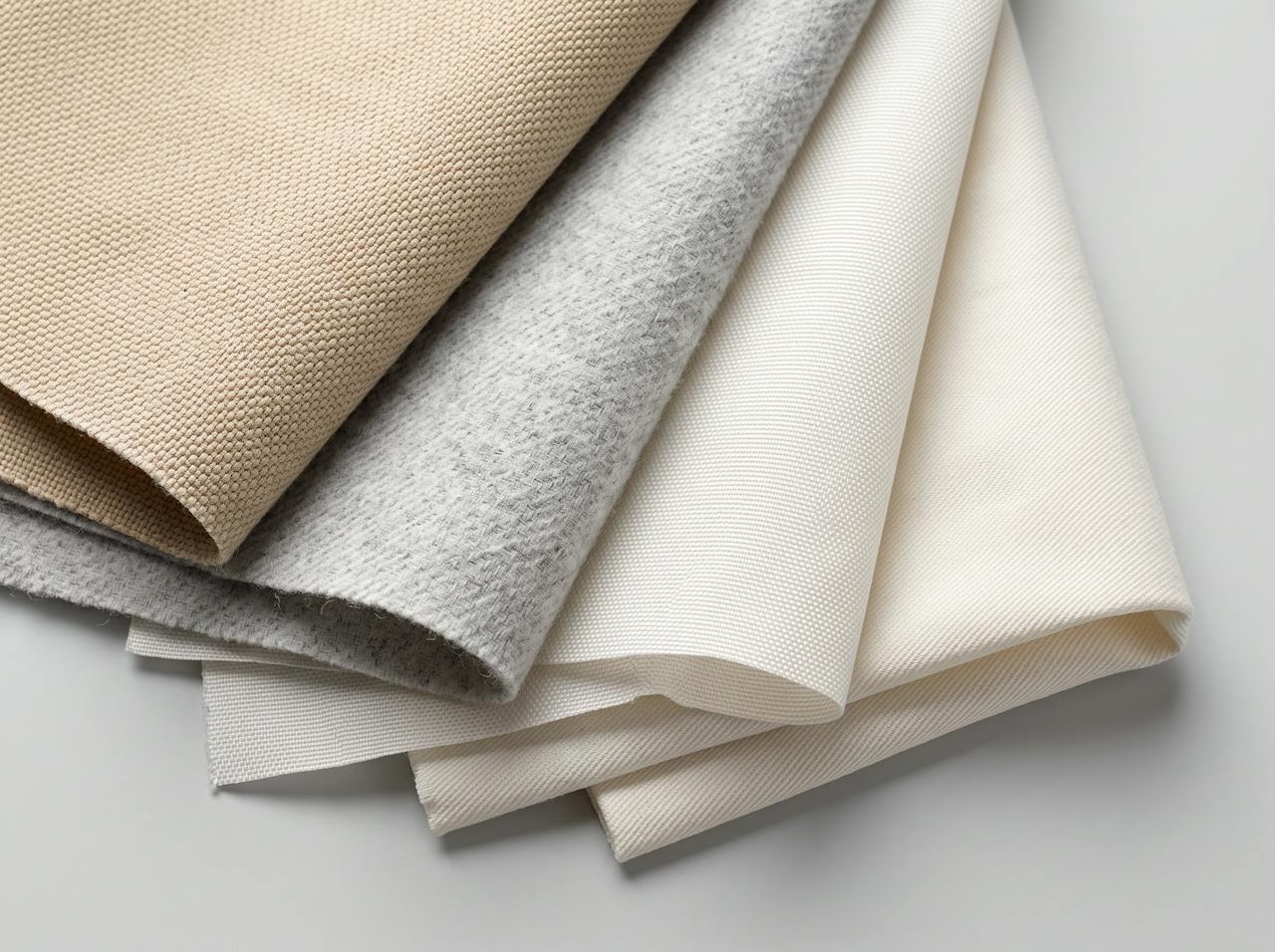
Swatches of woven filter fabrics including sateen, canton flannel and duck cloth
Woven Fabrics

Woven Filter Fabrics

Woven filter fabrics release dust easily and hold their shape, which makes them a good fit for shaker and reverse-air dust collectors, collection bags and covers. We work with cotton and polyester sateen, canton flannel from 8 to 14 oz., Dacron, polyester, nylon satin, and nylon, polyester and cotton duck.

Tightly woven fabrics such as Victor nylon, nylon duck and Cordura have very low air permeability for dust containment, while open weaves such as 322 polyester move more air. See our collection bags made from these fabrics.

Easy dust release

Sateen, flannel and duck

Low to high airflow

Shaker collectors

Specialty & Coated

Specialty, Coated and Screening Media

In addition to common woven and nonwoven textiles, we stock vinyl and rubber coated fabrics such as Hypalon and CL black and white rubber, and synthetic and stainless steel screening materials. Coated fabrics do not pass air, so they are used for connectors, covers and rubber and fabric connections.

We also work with an extensive range of special order material options for applications needing high temperature, chemical resistance, extra strength or air permeability, including Nomex® aramid for hot gas streams. Many of these fabrics are, or can be treated to, shed sticky dust, bleed static electricity and resist burning, and treated polyester media can improve ease of maintenance in sticky dust applications. Ask about screening media too.
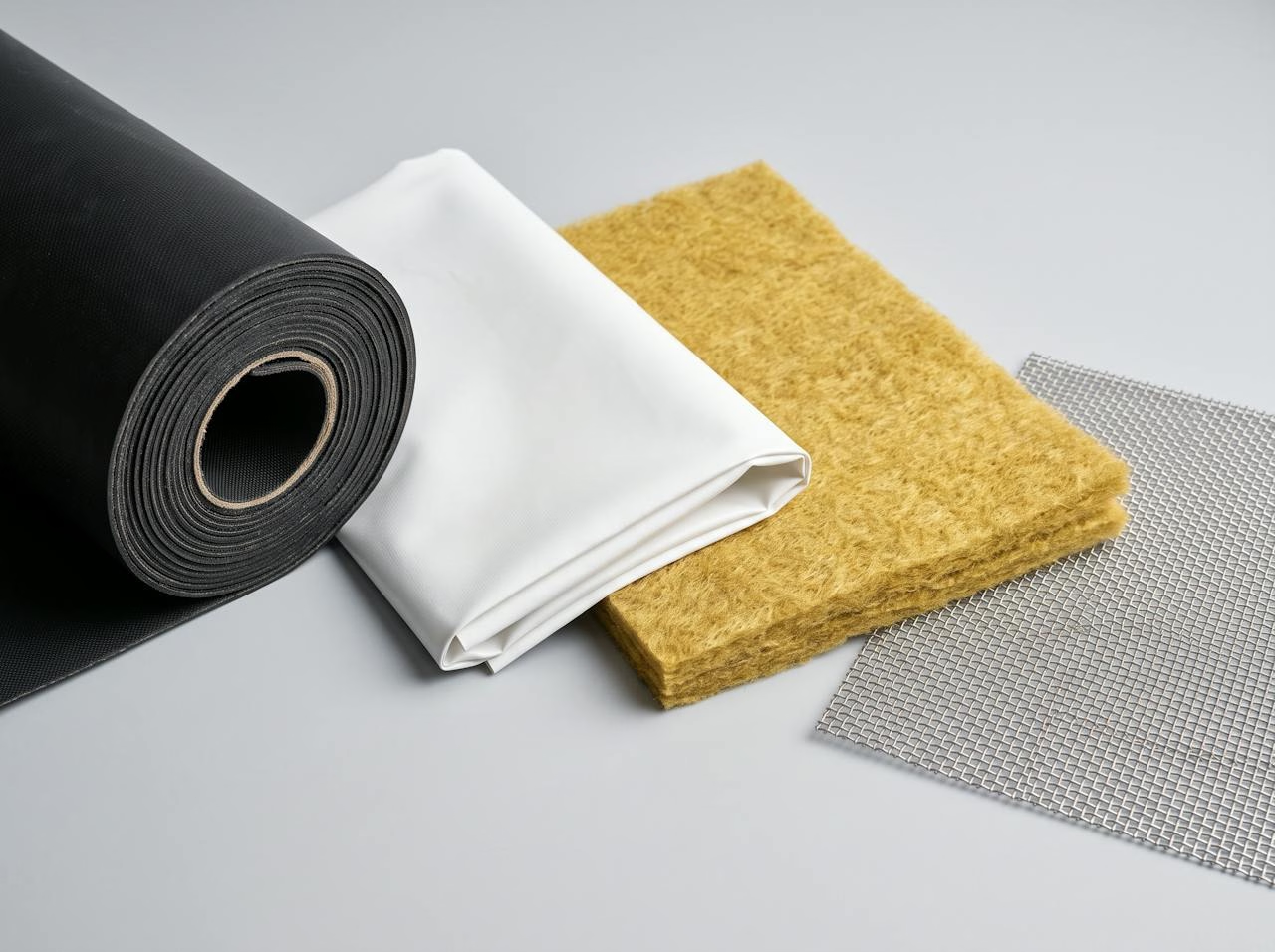
Rubber coated fabric, vinyl coated fabric, aramid high temperature felt and stainless steel wire mesh

High temperature fabrics

Chemical resistant options

Static and flame treatments

Rubber and vinyl coated

Bag vs Cartridge

Cartridge vs Bag Filter Media

Most industrial dust collectors use either cartridge or bag filters, and each filter type uses a different media. Felt and woven bag media handle heavy, abrasive and hot dust; pleated cartridge media offers high filtration efficiency on fine, dry dust with a smaller footprint. Polyester filter media in either form gives efficient dust capture for most industrial processes; the right choice depends on your specific application.

We supply both. See our replacement dust collector cartridge filters for pleated media, or ask which media is best for your application.

Factor Bag vs Cartridge Filter Media
Media Bags use needle felt or woven fabric; filter cartridges use pleated media such as spunbond polyester, cellulose blends or nanofiber-coated media
Dust load Bags handle heavy dust load and high-volume dust applications; cartridges suit light to moderate, dry dust
Temperature Bags are available in high-temperature fibers; standard filter cartridges run cooler
Cleaning Bags clean by pulse-jet, shaker or reverse air; cartridges clean by compressed air pulse
Footprint The pleated design packs more surface area into a compact collector design, so you need fewer filter elements
Fiber Properties

Fiber Reference Chart

Compare common filter fibers for acid, alkali, dry heat, mildew, abrasion and UV light resistance. Dry heat is shown as continuous / short-term exposure in °F. Use it to narrow the fiber for the conditions inside your baghouse or dust collector.

Fiber Acid Alkali Dry Heat °F (Continuous / Short) Mildew Abrasion UV Light Characteristics
Cotton Poor Fair 180 / 225 Poor Fair Poor General applications up to 210° F in neutral conditions.
Nylon Fair Excellent 200 / 275 Excellent Excellent Fair Excellent mechanical resistance.
Dacron Polyester Very Good Good 275 / 300 Excellent Good Very Good High temperature resistance. High tensile strength and mechanical resistance. Excellent dimensional stability.
Polypropylene Excellent Excellent 158 / 212 Not attacked by mildew Excellent Very Good Excellent resistance to most acids and alkalis. Limited resistance to high temperature. Good resistance to sunlight and abrasion.
Nomex® Fair Excellent 428 / 572 Excellent Excellent Fair Excellent resistance to high temperature. High tensile strength and mechanical resistance.
Fiber Identification

Fabric Burn Test

A quick way to identify an unknown filter fabric. Burn a small sample safely, away from anything flammable, and compare the flame, odor and ash to the chart. Or send us a sample and we will identify and match it.

Fabric Burning Characteristics Odor Ash
Cotton Burns with a flame. Has an afterglow. Burning paper Black, powdery
Polyester Melts and burns with a sputtering flame. Thick black smoke. Faintly sweet Hard, black, rough and shiny
Polypropylene Melts and burns with a steady, clear flame. No smoke. Very little odor Hard, turns opaque
Nylon Melts and burns with a sputtering flame. White smoke. Burning garbage Hard, round, gray-brown and shiny
Aramid / Nomex® Very slow to ignite. Will not support combustion or melt. Material chars and curls. Faintly sweet Black, crushes into black powder
Acrylic Melts and burns rapidly with a sputtering flame. Thick black smoke. Faintly sweet Crumbles into a black or brownish-orange powder
Industries

Dust Collection Media by Industry

We match filter fabrics to your dust, temperature and process, from woodworking and food to metal working and powder coating.

Powder Coating

Metal Working

Pharmaceutical

Food Processing

Woodworking

Manufacturing

Milling

Oil Field

FAQs

Filter Fabric Questions

Have a sample, a spec sheet or a dust problem you cannot solve? Our team can help choose the media.

Filter media is the fabric or material that actually captures dust and particulate in a filter. In a baghouse, the media is usually a needle felt or woven fabric sewn into bags, while a dust collector cartridge filter uses pleated media. The right choice depends on your dust, temperature, moisture and chemistry.

Needle felt is a nonwoven fabric made by needling fibers into a dense, three-dimensional mat. It captures fine dust deep in the fabric and is the standard media for pulse-jet baghouses. Woven filter fabrics such as sateen, canton flannel and duck cloth have an open weave and release dust easily, which suits shaker collectors.

Air permeability is how much air passes through a square foot of fabric at a set pressure drop, measured in cubic feet per minute. A lower CFM fabric is tighter and captures finer dust, while a higher CFM fabric moves more air with less resistance. Our air permeability chart lists typical ranges for each fabric we use.

Singeing passes the felt surface over a flame to remove loose fibers so dust releases more easily. Glazing presses the surface smooth with heat for even better dust cake release on sticky or fine dust. Both finishes can be on one side or both sides of the felt.

Polyester (Dacron) is rated to about 275° F continuous, and aramid fibers such as Nomex® handle about 428° F continuous. Polypropylene and cotton are limited to lower temperatures. Our fiber reference chart compares heat, acid, alkali, abrasion and UV resistance.

Yes. Many fabrics are, or can be treated to, shed sticky dust, bleed static electricity and resist burning. Tell us about your dust and process and we will recommend a fabric and finish.

A burn test is a quick way to identify the fiber. Burn a small sample safely and compare how it burns, its odor and its ash to our fabric burn test chart, or send us a sample and we will identify it and match it for your replacement filters.

Shop Online

Shop Filters Made From Our Media

Polyester felt dust collector bags, tapered bags and collection bags, ready to order.

Filter Bags

Replacement and custom dust collector filter bags.

Baghouse Filters

Filter bags, pleated bags and accessories.

Custom Production

Filters and fabric products built to spec.

Collection Bags

Breathable and poly collection bags.

Need Help Selecting the Right Media?

Send us your dust type, temperature, moisture and collector make and model, or a sample filter. We will recommend the right fabric.