
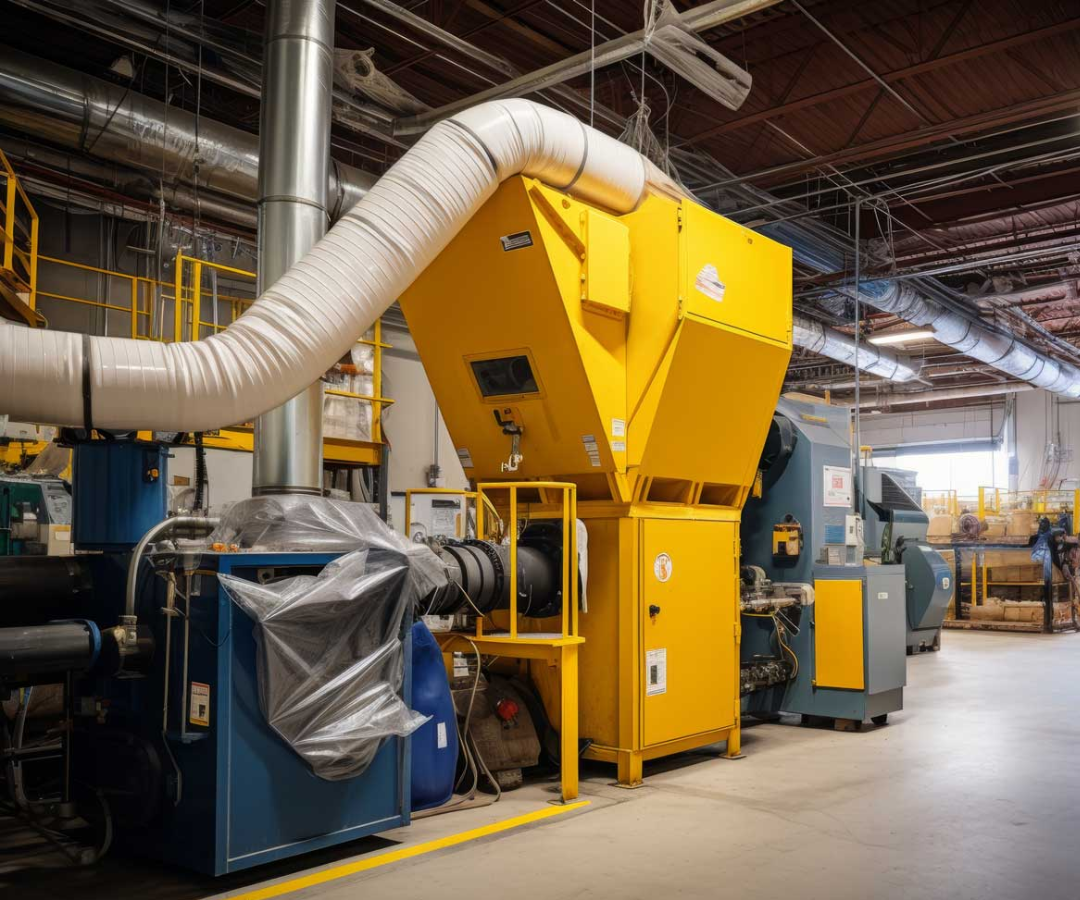
Effective dust collection hinges on reliable fabric filters that maintain airflow, minimize emissions, and protect downstream equipment. Troubleshooting common fabric filter issues is critical for industrial operations in food, wood, chemical, mineral, and pharmaceutical sectors. This guide reveals root‐cause analysis and actionable solutions for high pressure drop, filter bag failure, cleaning system optimization, environmental influences, regulatory compliance, general troubleshooting strategies, and abrasion control. You’ll learn how to monitor differential pressure, select durable filter media, optimize pulse jet and reverse‐air systems, and implement preventative maintenance.
Discover how American Fabric Filter’s custom filtration solutions integrate into each step to extend filter life and ensure peak baghouse performance.
What Causes High-Pressure Drop-in Fabric Filters and How Can It Be Resolved?
High pressure drop in a fabric filter occurs when accumulated dust cake, impaired airflow, or inadequate cleaning reduces permeability, forcing fans to work harder and increasing energy costs. Optimizing cleaning cycles and selecting appropriate media restores efficiency and extends baghouse lifespan.
What Is Pressure Drop and Why Does It Affect Baghouse Efficiency?
Pressure drop is the differential between inlet and outlet static pressure across a filter bag, measured in inches of water column (inH₂O). Elevated differential pressure signals dust cake buildup or bag blinding, reducing volumetric flow and impairing particulate capture. Accurate pressure drop management sustains airflow capacity and prevents fan overload.
Which Factors Lead to High-Pressure Drop-in Dust Collectors?
Before listing causes, consider the interplay of dust characteristics, airflow patterns, and cleaning performance that conspire to raise pressure drop.
- Dust cake thickness grows when dust adhesion outpaces cleaning cycles.
- Bag blinding occurs as sticky particulates form an impermeable layer on media surfaces.
- Airflow imbalances in ductwork lead to uneven filter loading and localized pressure spikes.
- Poor compressed‐air quality (moisture, oil) reduces pulse jet effectiveness and allows cake accumulation.
These factors often coincide, demanding a holistic approach to pressure recovery through cleaning and media selection.
How Can Cleaning Systems Be Optimized to Reduce Pressure Drop?
Proper tuning of pulse jet, shaker, or reverse‐air mechanisms restores permeability and minimizes energy consumption.
- Inspect and calibrate pulse duration and cycle frequency to match dust load characteristics.
- Ensure solenoid and diaphragm valves deliver consistent pressure pulses (60–80 psi) free of moisture.
- Balance reverse‐air system blower speeds to gently dislodge dust cake without shocking filter bags.
- Adjust shaker amplitude and interval to clear heavy dust loads while limiting bag wear.
Optimized cleaning extends filter service intervals and keeps differential pressure within target bands.
Optimal Conditions for Pulse-Jet Fabric Filter Cleaning
Research indicates that optimizing pulse-jet cleaning systems is crucial for maintaining fabric filter efficiency. Experimental studies have shown that specific pressure levels, such as 70 Psi, can achieve minimum pressure drops in polyester and linen filter bags, highlighting the importance of calibrating pulse duration and frequency to match dust load characteristics for effective cleaning and reduced energy consumption.
How Is Differential Pressure Monitored for Effective Troubleshooting?
Effective troubleshooting begins with real‐time pressure monitoring using precision magnehelic or digital differential gauges.
- Install gauges at inlet and outlet manifolds for accurate ΔP readings.
- Log pressure drop trends to identify progressive cake buildup or cleaning system degradation.
- Set alarm thresholds (e.g., 4–6 inH₂O) to trigger maintenance before efficiency loss.
Consistent ΔP tracking reveals when cleaning cycles or media changes are required, preventing unplanned downtime.
How Do You Identify and Prevent Filter Bag Failure in Fabric Filters?
Premature filter bag failure undermines dust collector reliability and elevates replacement costs. Identifying damage types and enforcing proper installation practices preserves media integrity.
What Are the Common Types of Filter Bag Damage?
| Damage Mode | Cause | Effect |
|---|---|---|
| Abrasion | High‐velocity particulates | Thinning or holes in bag surface |
| Tears | Mechanical impact or handling | Rapid media rupture and leakage |
| Chemical Attack | Corrosive gases or condensate | Fiber degradation and permeability loss |
| Thermal Stress | Exceeding temperature limits | Fiber embrittlement and cracking |
What Causes Premature Filter Bag Failure in Industrial Applications?
Premature failure often stems from installation errors, harsh dust abrasiveness, thermal excursions, or corrosive exposure. Improper sealing and clamped seams allow mechanical stress and gas bypass, while abrasive or hot dust abrades fibers. Corrosive vapors weaken polymer chains, reducing tensile strength. Addressing each cause maintains baghouse uptime.
How Do You Select the Right Filter Media for Durability and Chemical Resistance?
Media selection balances mechanical, chemical, and thermal properties:
- Polyester offers broad chemical resistance up to 275 °F and economical abrasion performance.
- Aramid withstands temperatures to 400 °F with superior tensile strength but is sensitive to acids.
- PTFE membranes provide chemical inertness and release properties, ideal for sticky dust.
- Fiberglass endures temperatures above 500 °F but requires corrosion‐resistant coatings.
Matching media to process conditions prevents chemical attack, thermal degradation, and abrasion damage.
Interaction of Particles and Filter Fabric in Ultrafine Filtration
Studies on ultrafine filtration reveal that the interaction between particles and filter fabric significantly influences flow resistance and overall filtration performance. The initial resistance of filtration does not solely depend on the pure water resistance of the filter fabric but increases considerably due to particle interaction, which can lead to a strong reduction in the hydraulic load capacity of the filter apparatus.
What Are Best Practices for Filter Bag Installation and Replacement?
Consistent installation ensures seal integrity and uniform loading:
- Inspect cage alignment and verify inner diameter tolerance to prevent bag collapse.
- Use new gaskets and confirm proper bolt torque on plate clamps to avoid air leaks.
- Employ bag‐in‐place techniques that avoid twisting or pulling stresses.
- Replace full sets of bags in zones to maintain consistent airflow distribution.
Proper installation extends bag life and supports efficient dust collection.
How Can Fabric Filter Cleaning Systems Be Diagnosed and Optimized?
Faulty cleaning systems allow dust cake to accumulate, raising pressure drop and emissions. Diagnosing pulse jet, shaker, and reverse‐air systems uncovers valve, timer, and airflow issues that degrade performance.
What Are Common Pulse Jet Cleaning Problems and Their Solutions?
Pulse jet systems can malfunction if compressed air supply or valve timing is incorrect:
- Low air pressure (<60 psi) reduces cleaning impulse—inspect and repair leaks.
- Damaged diaphragms or solenoid coils cause weak pulses—replace faulty valves.
- Incorrect timer settings lead to over‐ or under‐cleaning—optimize pulse interval and duration based on ΔP data.
Addressing valves and air supply restores cleaning efficiency and prolongs bag service life.
How Do Reverse Air and Shaker Systems Affect Filter Performance?
Reverse‐air systems use blower‐generated backflow to dislodge dust cake, while shaker systems mechanically vibrate bags.
- Insufficient blower volume in reverse‐air can leave cake adhered—verify fan capacity.
- Over‐vigorous shaking accelerates bag wear—tune amplitude to gently loosen dust.
- Imbalanced zone cleaning can cause cake carryback—synchronize cleaning sequences.
Balanced reverse‐air and shaker adjustments maintain dust release without compromising media integrity.
How Does Cleaning Frequency Impact Filter Lifespan and Efficiency?
Cleaning too often increases mechanical stress, while infrequent cleaning allows cake compaction. The ideal balance:
- Use ΔP trend analysis to set trigger thresholds (e.g., 3–5 inH₂O) for cleaning events.
- Adjust intervals seasonally to account for changes in dust moisture or production rates.
- Monitor bag condition during major shutdowns and revise schedule based on wear patterns.
Optimal frequency sustains airflow while minimizing cleaning‐induced fatigue.
What Environmental and Operational Factors Affect Fabric Filter Performance?
Seasonal humidity, high process temperatures, corrosive atmospheres, and dust properties all influence filter behavior. Proactive countermeasures maintain efficiency and media life.
How Does Moisture and Condensation Cause Bag Blinding and Filter Issues?
Elevated humidity or below‐dew‐point gas streams condense on media surfaces, forming a sticky film that traps dust and blocks pores. Installing pre‐filters, dew point controls, and heated inlet sections prevents condensation and bag blinding, preserving permeability and preventing microbial growth.
What Are the Effects of High Temperature and Thermal Degradation on Filter Bags?
Operating above media temperature limits accelerates polymer breakdown, causing embrittlement and fiber fragmentation. Thermal cycling exacerbates stress. Selecting high‐temperature media (aramid, fiberglass) and insulating hot zones averts thermal degradation and maintains cake release characteristics.
How Can Chemical Exposure and Corrosion Be Prevented in Fabric Filters?
Corrosive process gases degrade fibers and weld seams. Chemical compatibility charts guide material selection—PTFE liners resist acids, while acrylic coatings protect polyester from alkali attack. Periodic leak inspections and corrosion‐resistant hardware extend baghouse component life.
How Do Dust Characteristics Like Stickiness and Abrasion Impact Filter Life?
Sticky or abrasive dust alters cake properties:
- Sticky fines form dense, impermeable layers that resist cleaning.
- Abrasive particles erode fibers through mechanical impact.
Implementing sacrificial pre‐filters or adhesive‐release membranes and choosing high‐wear‐resistant fabrics mitigates these effects.
How Can You Enhance Fabric Filter System Efficiency and Ensure Regulatory Compliance?
Elevating baghouse performance and meeting emissions standards require optimized air‐to‐cloth ratios, leak detection, and rigorous preventative maintenance aligned with EPA and industry guidelines.
Evaluation of Pulse-Jet Baghouse Dust Collectors’ Contribution to CO₂ Emissions
An analysis of industrial pulse-jet baghouse collectors highlights their environmental impact beyond particle removal, specifically concerning CO₂ emissions from manufacturing and operation. Optimizing these systems, including factors like filter material, dust type, and pulse-jet parameters, can significantly reduce energy consumption and associated CO₂ emissions, contributing to environmental safety and sustainable industrial practices.
What Are Effective Methods to Improve Filtration Efficiency?
| Parameter | Adjustment | Outcome |
|---|---|---|
| Air-to-Cloth Ratio | Reduce to 2–3:1 (ft/min) | Lower face velocity, gentler cake formation |
| Gas Flow Uniformity | Install inlet diffusers | Even dust deposition and cleaning |
| Pulse Intensity | Increase to 80 psi when needed | More thorough cake removal |
| Media Selection | Add PTFE membrane overlay | Enhanced particulate release and release |
How Do You Detect and Prevent Dust Emissions and Leaks?
Regular walk‐around inspections and smoke tests reveal leaks at gaskets, hoppers, and duct joints. Retrofit sandwich‐seal clamps and high‐temperature gasketing prevent bypass. Installing real‐time opacity monitors ensures continuous compliance with emission permits.
What Are Key Regulatory Requirements for Industrial Dust Collection?
Industrial facilities must comply with EPA’s National Emission Standards for Hazardous Air Pollutants (NESHAP) and local particulate limits. Requirements include performance testing, regular leak checks, and maintaining visible emissions below prescribed opacity levels (e.g., <20% opacity over six minutes). Documenting inspections and repairs supports audit readiness.
How Should Preventative Maintenance Schedules Be Developed and Followed?
A structured schedule includes daily ΔP checks, weekly valve inspections, monthly leak tests, and annual bag replacement or media conditioning. Embedding these tasks into a computerized maintenance management system (CMMS) ensures timely execution and traceable records, minimizing unplanned downtime and sustaining compliance.
What Are the Best Practices for Diagnosing and Solving Common Industrial Filter Problems?
A systematic approach to symptom identification and root‐cause resolution accelerates problem solving and reduces repetitive failures.
How Do You Systematically Identify Symptoms of Fabric Filter Issues?
Identify symptoms through combined monitoring of ΔP trends, outlet opacity, and airflow capacity.
- Rising ΔP with stable load suggests cleaning or media issues.
- Visible dust leaks or hissing sounds indicate seal failures.
- Fluctuating airflow points to fan or duct blockage.
Symptom classification guides targeted diagnostics.
What Step-by-Step Actions Resolve Typical Fabric Filter Problems?
Resolving common issues involves a standard procedure:
- Review ΔP and emission data to pinpoint affected zones.
- Inspect cleaning system components and verify valve timing.
- Examine bag media for wear, tears, or chemical attack.
- Replace or rotate bags as needed and recalibrate cleaning intervals.
- Test for leaks and re-seal hoppers, manways, and filter plates.
Following these steps restores dust collector performance and prevents recurrence.
What Are the Signs of Filter Bag Abrasion and How Can It Be Minimized?
Detecting and preventing abrasion extends filter life in abrasive dust environments common in mineral processing, metalworking, and cement plants.
How Does Abrasion Occur in Fabric Filters?
Abrasion arises when high-velocity particulate impinges on bag surfaces, wearing fibers through mechanical friction. This leads to thinning, pitting, and eventual perforation that compromise dust capture.
Which Filter Materials Offer the Best Abrasion Resistance?
Materials designed for abrasive service include:
- High-performance aramid fabrics with tight weave patterns resist cutting and friction.
- Silicone-coated fiberglass combines heat resistance with surface durability.
- Polyphenylene sulfide (PPS) offers chemical and abrasion resistance up to 400 °F.
Selecting these fabrics dramatically reduces wear rates.
What Maintenance Practices Reduce Abrasion Damage?
Proactive maintenance curbs abrasion through:
- Periodic inspections using borescopes to detect early fiber wear.
- Reversing airflow direction temporarily to reposition dust cake and reduce direct impingement.
- Installing sacrificial liners in inlet zones to shield primary media.
These measures mitigate erosion and prolong filter service intervals.
Filter bag abrasion control completes the troubleshooting cycle, ensuring baghouses operate efficiently and compliantly across diverse industrial environments.
How Can Custom Filtration Solutions Address Unique Industrial Challenges?
Off‐the‐shelf bags may not suit every dust characteristic or regulatory requirement. Custom media blends, specialized coatings, and tailored baghouse designs from American Fabric Filter resolve unique challenges—whether high‐moisture food dust, corrosive chemical streams, or pharmaceutical cleanliness demands, engineered solutions ensure optimal efficiency and compliance.


