
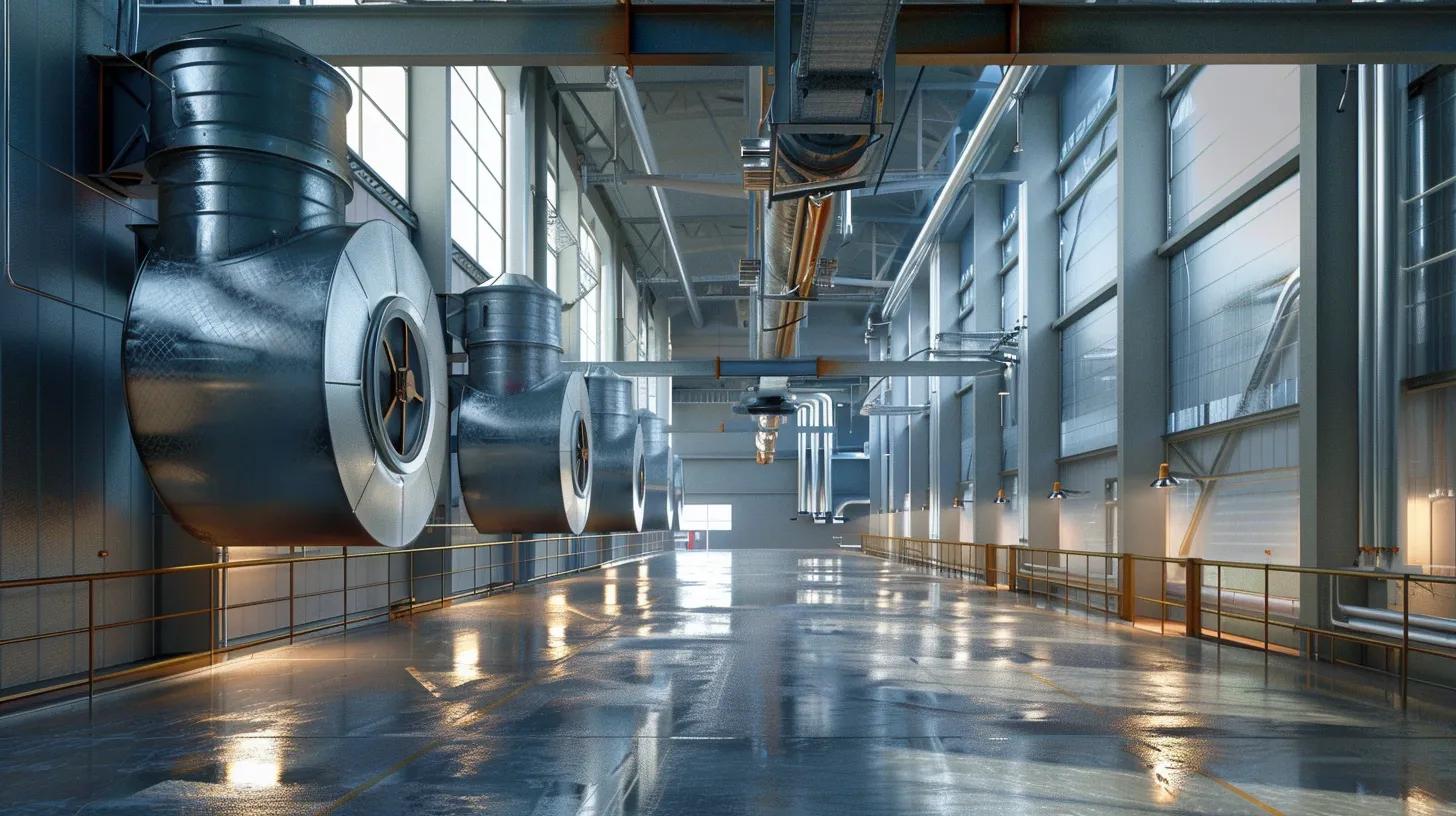
Selecting the optimal industrial dust collector can dramatically improve air quality, regulatory compliance, and operational uptime. In the “baghouse filter vs fabric filter” debate, understanding their mechanics, performance differences, advantages, and limitations is essential for businesses in food, wood, chemical, mineral, and pharmaceutical sectors. This guide defines each system, examines components and cleaning methods, compares efficiency and operating costs, and walks you through a decision framework. Finally, discover how American Fabric Filter Co. delivers custom filtration solutions tailored to your specific application needs.
What is a Baghouse Filter and How Does It Work?
A baghouse filter is an industrial dust collector that captures particulate matter by forcing contaminated gas through fabric filter bags, providing high-efficiency separation for a range of dust types. By creating a dust cake layer on bag surfaces, it enhances filtration and reduces emissions. For example, a chemical processing plant can achieve over 99% removal efficiency.
Study on the Filtration Performance of the Baghouse Filters for Ultra-Low Emission as a Function of Filter Pore Size and Fiber Diameter
Research indicates that the filtration performance of baghouse filters, particularly for ultra-low emissions, is significantly influenced by filter pore size and fiber diameter. Studies show that smaller pore sizes and fiber diameters in depth filtration media improve filtration efficiency and resistance, while surface filtration media like PTFE membrane-coated filters are highly effective for fine particles such as PM2.5.
What Are the Key Components of a Baghouse Filter?
Industrial baghouse systems consist of several critical parts that enable effective dust capture and removal:
- Filter Bags: Cylindrical textile tubes that trap particles; made from polyester, PTFE or aramid media.
- Housing: Steel or stainless-steel casing that contains filter bags and supports airflow.
- Inlet/Outlet Ducts: Channels directing contaminated and clean air streams.
- Hopper: Conical or stepped section that collects and funnels dust for disposal.
- Cleaning System: Mechanism—pulse-jet, shaker, or reverse air—that dislodges accumulated dust cake.
- Support Cage: Metal frame providing bag rigidity and preventing collapse.
- Fans and Dampers: Regulate differential pressure and airflow through the system.
These components work in concert to maintain consistent performance and prepare the baghouse for effective pulse-jet or reverse-air cleaning, ensuring minimal downtime.
How Does the Baghouse Filtration Process Capture Particulate Matter?
Baghouse filtration employs a sequence of dust-laden gas entry, media filtration, dust cake formation, and cleaned air discharge. First, contaminated air enters the inlet duct and disperses across the filter bag array. As gas permeates the bag wall, solid particles accumulate on the exterior, forming a dust cake that further filters fine particulates. Cleaned air then exits through the outlet and returns to the environment or process. This self-reinforcing cake layer improves efficiency until periodic cleaning restores airflow.
What Are the Common Baghouse Cleaning Methods?
Baghouse cleaning methods remove dust cake buildup to maintain low differential pressure and consistent filtration efficiency. The three primary techniques are:
- Pulse-Jet Cleaning: A rapid blast of compressed air travels down each bag, flexing the fabric and releasing dust.
- Shaker Cleaning: Mechanical vibration shakes the bags, dislodging dust into the hopper.
- Reverse-Air Cleaning: Slight pressure reversal pushes air upward through the bag, loosening accumulated cake.
How Does Pulse-Jet Cleaning Improve Baghouse Efficiency?
Pulse-jet cleaning delivers high-pressure air in short bursts, instantly flexing the bag fabric to dislodge even fine dust. This on-line cleaning approach maintains stable airflow, minimizes production interruptions, and extends filter bag service life by reducing abrasion from excessive shaking. As a result, facilities can run longer cycles between maintenance shutdowns and sustain peak filtration performance under high dust loading.
What Are the Advantages of Shaker and Reverse Air Cleaning Systems?
Shaker and reverse-air methods offer gentler cleaning action that benefits delicate or specialty filter media:
Shaker Cleaning:
- Lower compressed air consumption
- Reduced stress on filter seams
- Simpler mechanical design
Reverse-Air Cleaning:
- Uniform cake removal across bag length
- Minimal fabric flexing extends bag life
- Effective for coarse dust applications
What is a Fabric Filter and How Is It Used in Dust Collection?

A fabric filter refers broadly to any dust collector using woven or felted textile media to separate particulates from gas streams. Functionally synonymous with a baghouse, fabric filters range from bag systems to cartridge-style collectors. They serve industries requiring submicron removal of contaminants, such as pharmaceutical milling or food ingredient handling, by offering tailored media options that meet chemical compatibility, temperature, and abrasion demands.
How Does a Fabric Filter Relate to Baghouse Filters?
Fabric filters encompass baghouse filters but also include pleated cartridge collectors that use high-surface-area elements. While a baghouse specifically denotes the vessel containing filter bags, the term “fabric filter” highlights the media itself and its role in filtration. Both systems leverage similar mechanisms—dust cake formation and periodic cleaning—but vary in element geometry and maintenance access.
What Types of Fabric Filter Media Are Commonly Used?
Below is an overview of popular filter media choices, their characteristics, and typical applications.
| Media Type | Key Property | Typical Application |
|---|---|---|
| Polyester Felt | Cost-effective, versatile | General industrial dust collection |
| Polypropylene | Chemical resistance | Chemical processing, acidic gases |
| Aramid (Nomex®) | High temperature | Cement kilns, metal forging |
| PTFE Membrane | Microparticle removal | Pharmaceutical, fine powders |
Each media offers distinct benefits in terms of chemical compatibility, temperature tolerance, and filtration efficiency, informing the selection process for specific industrial environments.
How Do Fabric Filter Cleaning Methods Affect Performance?
Cleaning strategies for fabric filters—pulse-jet, reverse air, and shaker—affect filtration resistance and media degradation. Aggressive pulse-jet cycles restore permeability quickly but can accelerate media wear. Reverse-air cleaning provides gentler cake release, supporting longer filter life with slightly higher operational pressure. Shaker systems suit lower airflow rates and delicate media but may require more frequent manual intervention. Balancing cleaning intensity and cycle frequency maintains low differential pressure and maximizes service intervals.
What Are the Key Differences Between Baghouse Filters and Fabric Filters?
While “baghouse” and “fabric filter” are often used interchangeably, key distinctions emerge in system design, element form factor, and operational footprint.
| Media Type | Key Property | Typical Application |
|---|---|---|
| Polyester Felt | Cost-effective, versatile | General industrial dust collection |
| Polypropylene | Chemical resistance | Chemical processing, acidic gases |
| Aramid (Nomex®) | High temperature | Cement kilns, metal forging |
| PTFE Membrane | Microparticle removal | Pharmaceutical, fine powders |
How Do Design and Construction Differ Between Baghouse and Fabric Filters?
Baghouse filters typically house bags in row-tube or shaker compartments with internal cages and roof-mounted blow pipes for cleaning. Fabric filters—particularly cartridge systems—use modular elements with pleated media on a core, offering plug-and-play maintenance. Cartridge collectors require less floor space but often invest more in high-surface-area media and HVAC design to manage airflow patterns.
What Are the Differences in Filtration Efficiency and Dust Loading Capacity?
Baghouses excel in high dust loading applications due to robust cake support and deep-bed filtration. Cartridge fabric filters deliver similar efficiency for fine particulates but may experience faster pressure rise when overloaded. Selecting appropriate media and sizing air-to-cloth ratios enables each system to achieve target emission limits while balancing maintenance cycles.
How Do Footprint, Maintenance, and Operating Costs Compare?
Baghouse installations demand more floor area and structural support but leverage lower media costs and simpler access points for bag replacement. Cartridge fabric filters reduce footprint and simplify changeouts yet incur higher media expenses and compressed-air requirements. Total cost of ownership hinges on dust characteristics, scheduled downtime allowances, and energy consumption of cleaning systems.
Which Cleaning Methods Are Unique to Each Filter Type?
Pulse-jet cleaning is universal, but shaker and reverse-air systems are traditionally tied to baghouses. Cartridge filters may incorporate sonic horn cleaning or reverse-pulse configurations to optimize cake release without element damage. Understanding these distinctions ensures appropriate maintenance protocols and media longevity.
How Do Temperature and Application Suitability Vary?
Standard polyester baghouses operate reliably up to 350 °F, while aramid or PTFE media extend service to 500 °F or above. Cartridge filters often combine specialized PTFE membranes for harsh chemical or sub-micron applications. Matching media properties to process temperature, moisture, and chemical exposure ensures consistent performance and regulatory compliance.
What Are the Advantages and Disadvantages of Baghouse Filters?
Evaluating pros and cons guides decision-making for high-volume dust management needs.
What Are the Efficiency and Durability Benefits of Baghouse Filters?
- Baghouse filters provide exceptionally high removal efficiency, capturing particles down to 0.5 µm.
- Robust construction and support cages extend media life in abrasive environments.
- Modular designs allow scalable configurations for large airflow volumes.
What Are the Common Limitations and Maintenance Challenges?
- Larger footprints and structural reinforcement increase installation costs.
- Shaker and reverse-air cleaning requires periodic shutdowns or compartment isolation.
- Pulse-jet systems consume significant compressed air, raising operational expenses.
Awareness of these factors helps balance initial investment against long-term performance and maintenance scheduling.
What Are the Advantages and Disadvantages of Fabric Filters?
Fabric filter systems—especially cartridge collectors—offer unique trade-offs.
How Does Media Versatility Benefit Fabric Filters?
- Pleated cartridges deliver high surface area in compact housings.
- Specialty media (PTFE, aramid) adapt to chemical and temperature extremes.
- Quick-change elements minimize downtime and simplify maintenance.
This versatility suits pharmaceutical, food processing, and high-purity applications demanding stringent emission control.
What Are the Temperature and Cleaning Limitations?
- Cartridge filters may experience accelerated pressure rise under heavy dust loads.
- Membrane and PTFE layers can delaminate if over-pulsed or exposed to oil/mist.
- Restricted cleaning methods may require element removal, increasing labor.
Understanding these constraints ensures proper sizing and cleaning protocols that preserve media integrity.
How to Choose the Right Industrial Dust Collection System: Baghouse vs Fabric Filters?
Selecting between baghouse and fabric filters requires a holistic evaluation of process conditions, budget, and compliance requirements.
What Factors Should Influence Your Filtration System Selection?
Key criteria include:
- Dust Characteristics – Particle size, abrasiveness, chemical reactivity.
- Airflow Rate – Required cubic feet per minute and air-to-cloth ratio.
- Operating Temperature – Media temperature tolerance and process heat.
- Footprint Constraints – Available floor space and building structure.
- Maintenance Strategy – Desired cleaning frequency and downtime limits.
- Budget Considerations – Capital outlay vs. long-term operating cost.
Evaluating these factors upfront steers you to the most cost-effective and compliant solution.
When Is a Baghouse Filter the Best Choice?
Baghouse filters excel when handling large volumes of coarse or abrasive dust in applications such as cement, metalworking, or wood milling. Their robust cleaning methods and dust cake support deliver consistent removal efficiency, even under heavy particulate load.
When Should You Consider Fabric Filters or Cartridge Filters?
Cartridge-style fabric filters suit operations with fine or sticky dusts—such as pharmaceutical granulation or chemical powder handling—that require compact systems and rapid element changeovers. Their high surface area and specialized media options deliver submicron control in minimal floor space.
How Do Regulatory and Environmental Standards Affect Your Choice?
Emissions permits, OSHA exposure limits, and local air quality regulations dictate allowable particulate release. Systems capable of achieving ≤0.01 gr/dscf or 99.9% efficiency often require membrane-enhanced media or multistage filtration. Understanding these requirements ensures compliance and avoids costly retrofits.
How Does American Fabric Filter Provide Custom Solutions for Baghouse and Fabric Filters?
American Fabric Filter Co. combines deep expertise in media selection, custom bag design, and transfer sleeve fabrication to deliver tailored dust control solutions. By aligning filtration performance with your process needs, the company helps businesses achieve operational excellence.
American Fabric Filter | Fabric Filters integrates custom production capabilities across food, wood, chemical, and mineral industries to optimize dust collection.
What Custom Filter Bags and Transfer Sleeves Does American Fabric Filter Offer?
- Custom-sewn polyester, polypropylene, aramid, and PTFE filter bags to fit any collector design.
- Reinforced transfer sleeves and connection cuffs for pneumatic conveying systems.
- Custom-engineered seam types, gaskets, and finishes to match process temperatures and chemical exposures.
These products ensure seamless integration and peak performance across diverse applications.
How Does Customization Improve Filtration Performance in Different Industries?
Tailored media formulations and bag constructions address specific challenges—such as moisture-laden food dust, high-temperature cement kiln emissions, or corrosive chemical fumes—by optimizing cake release, reducing corrosion, and extending service intervals. Industry-specific solutions deliver measurable gains in uptime and compliance.
How Can You Request a Custom Filtration Solution or Quote?
Contact the American Fabric Filter sales team to discuss your application requirements, dust characteristics, and desired performance metrics. A dedicated engineer will recommend the ideal media, bag style, and cleaning method, then provide a detailed quotation and lead time for your custom order.
Smooth integration of custom filter bags, transfer sleeves, and dust collection expertise empowers your facility to maintain clean air standards, protect equipment, and sustain productivity.
Selecting the right dust collector—whether baghouse or fabric filter—ensures both environmental compliance and efficient operation. By understanding their differences, advantages, and application fit, you can make informed choices that drive performance.
Partnering with American Fabric Filter guarantees expert guidance, custom solutions, and industry-tested media to meet your unique dust collection challenges. Contact Us Today for a Free Quote.


